From empty terrain to a view with friends.
Thirty-five labeled images trace world-building studies, alpha play, N10b packaged QA views and Otis’s studio-model likeness work. Each frame is labeled for what it actually shows.
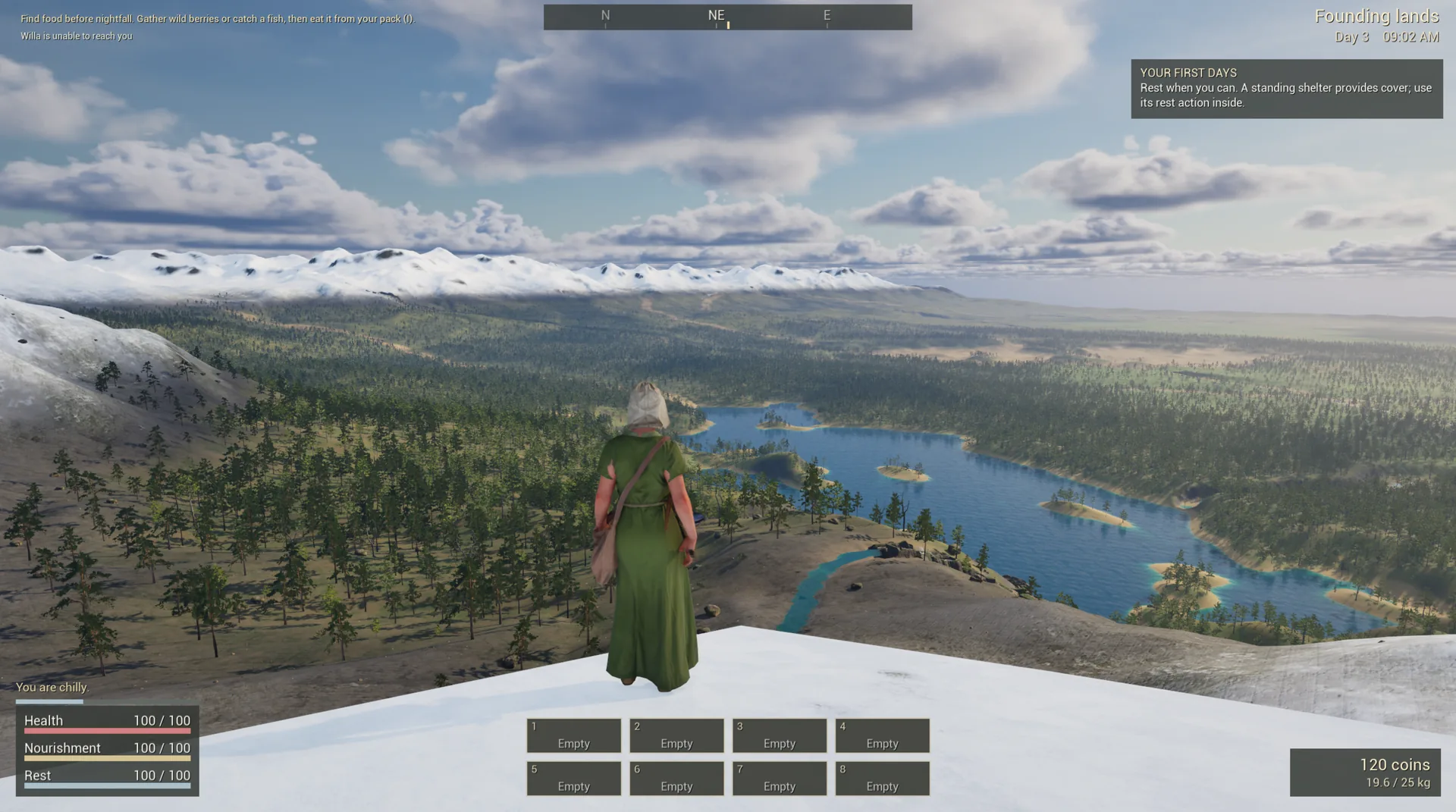
A view is a checkpoint, not a finish line.
Editor pictures show terrain, paint and grass in progress. Alpha gameplay pictures show places Jim could see in the game. Neither kind of image proves the whole world is finished, that every region is traversable, or that NPC work, routes and saved continuation pass a normal first-hour test. The Otis section pairs tightly framed real-dog references with studio model renders and inspection annotations; none is gameplay.
Building the land.
These earlier Unreal Editor images show the valley’s construction and diagnostic passes. Their exact build dates are not verified, and they are not packaged gameplay.
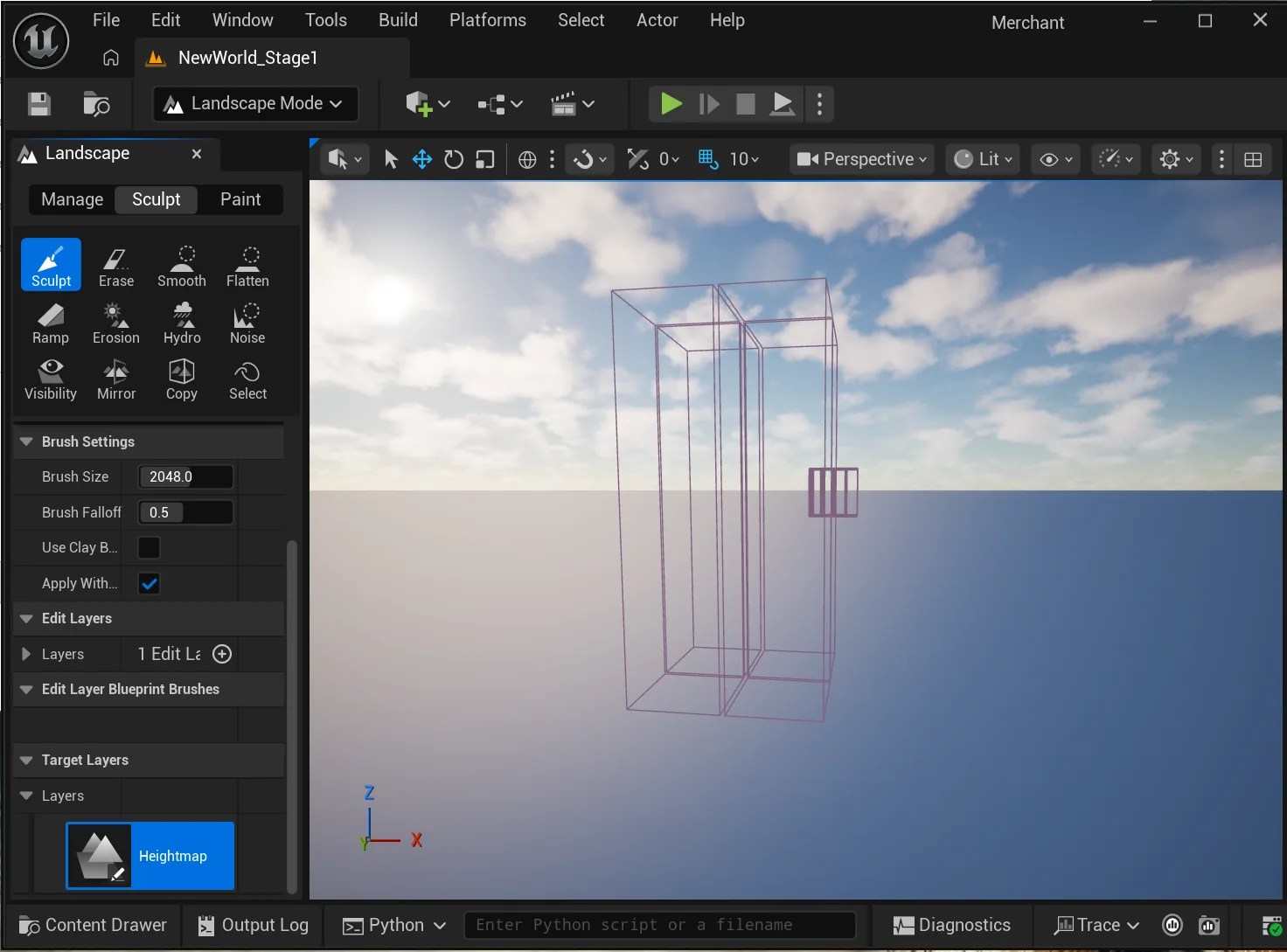
An empty NewWorld_Stage1 editor view before the valley terrain was shaped. This is process evidence, not gameplay.
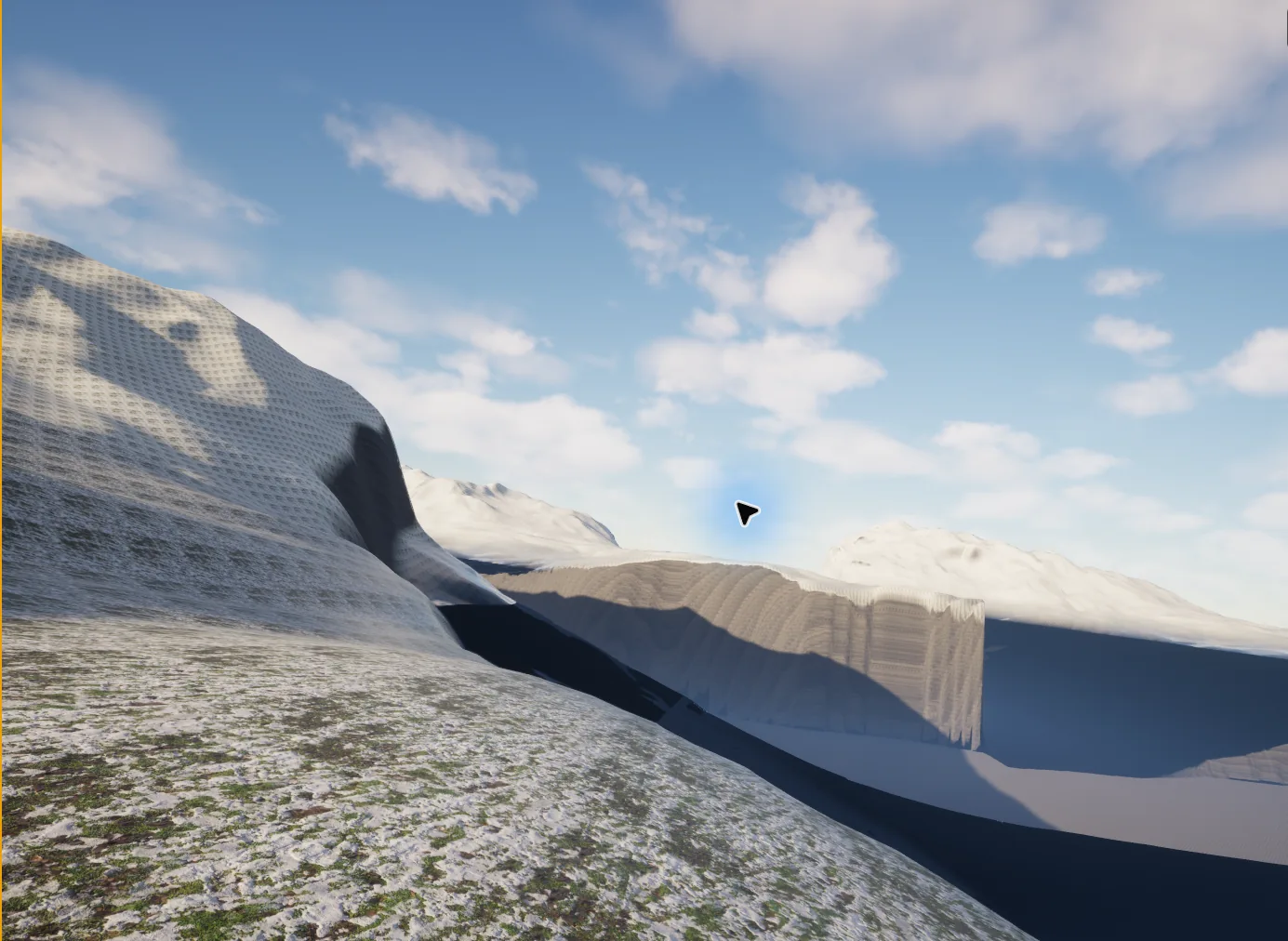
An unfinished canyon sculpt tests the scale of the land before scenery and player routes are resolved.
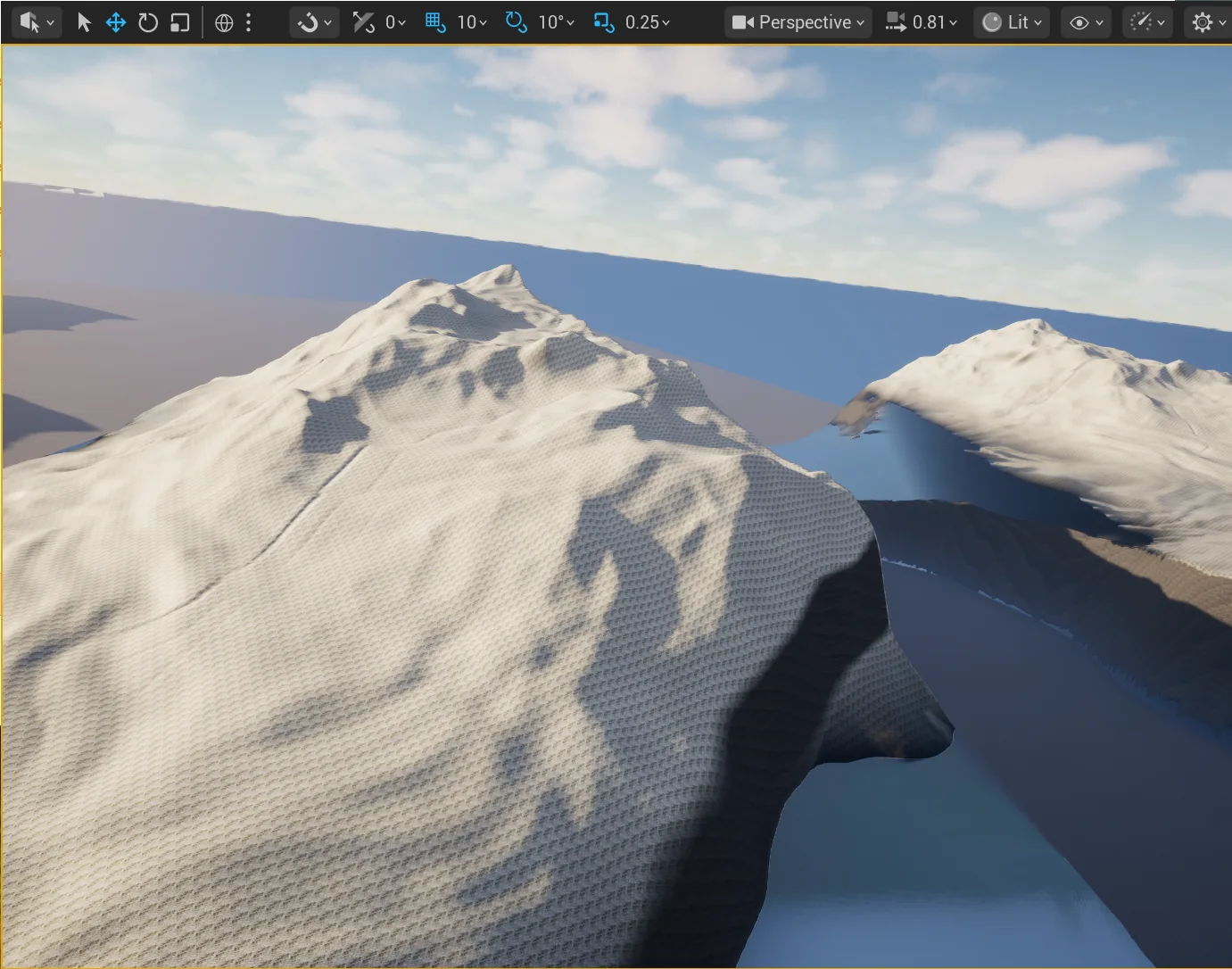
An early mountain overview establishes the high ground that frames the valley. It is not a finished playable pass.
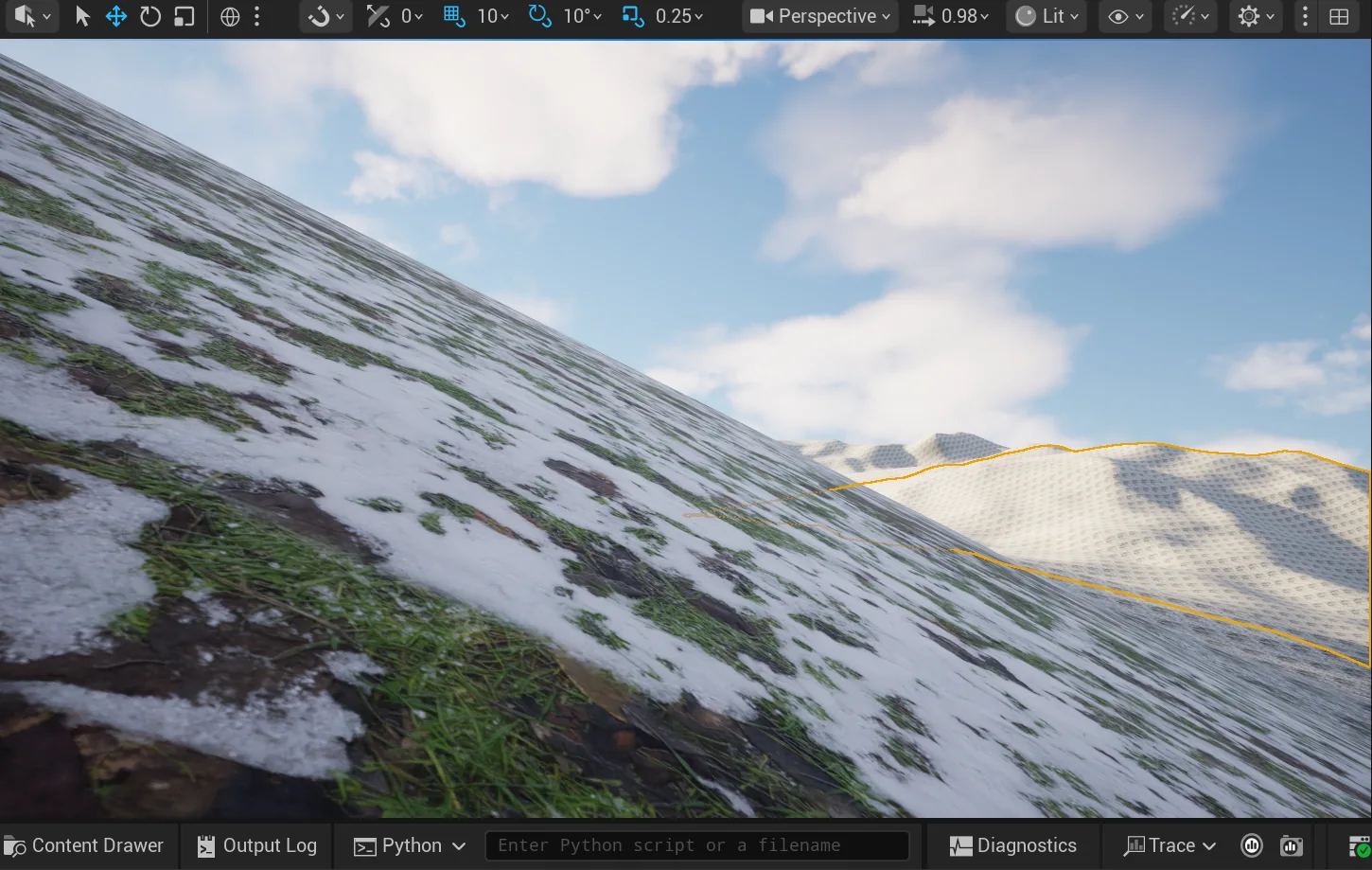
An editor study of snow and ground on a steep slope; the transition remained under review.
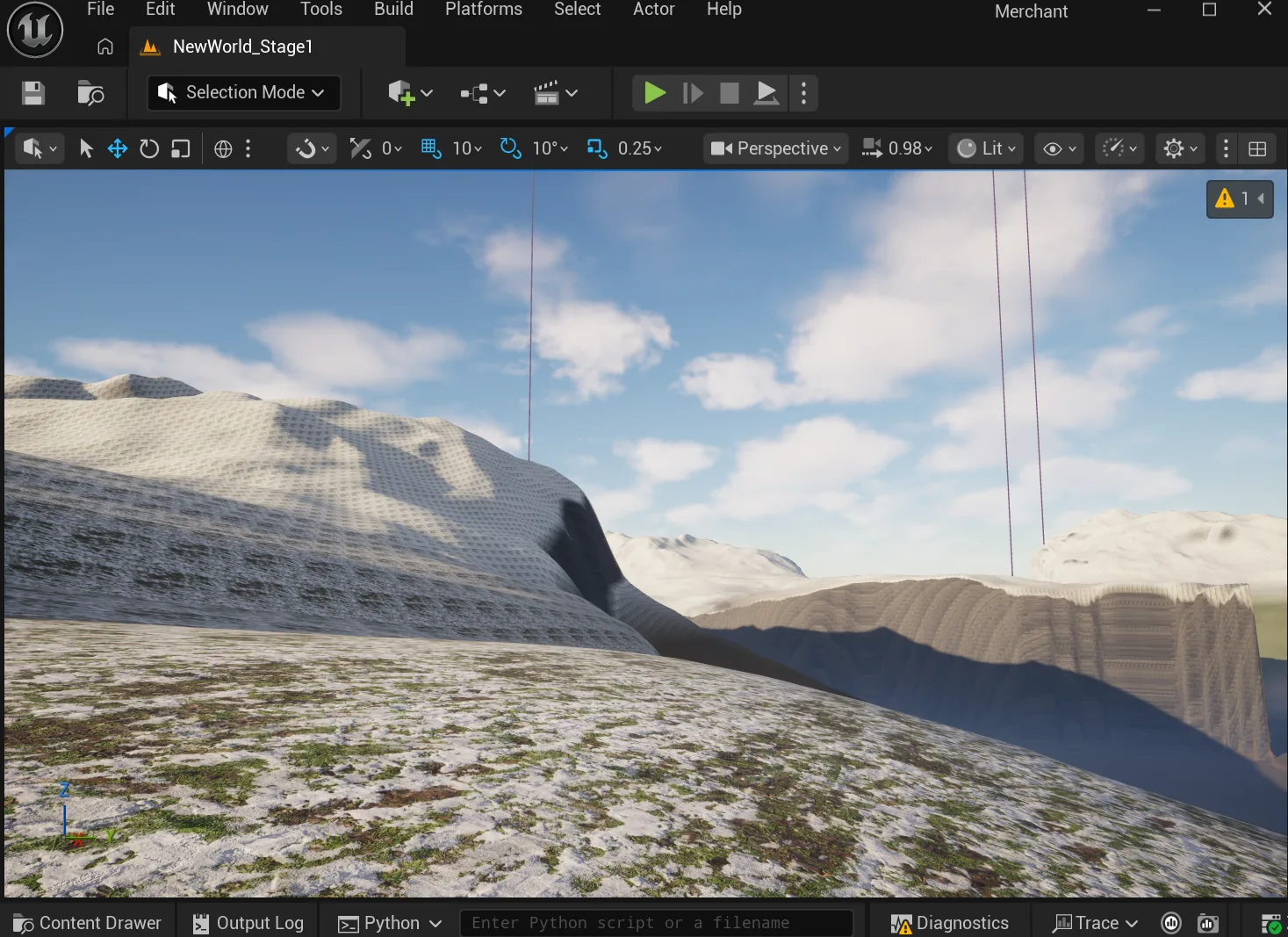
The ridge and canyon shape begins to suggest a region, while crossings and ground contact still need ordinary play testing.
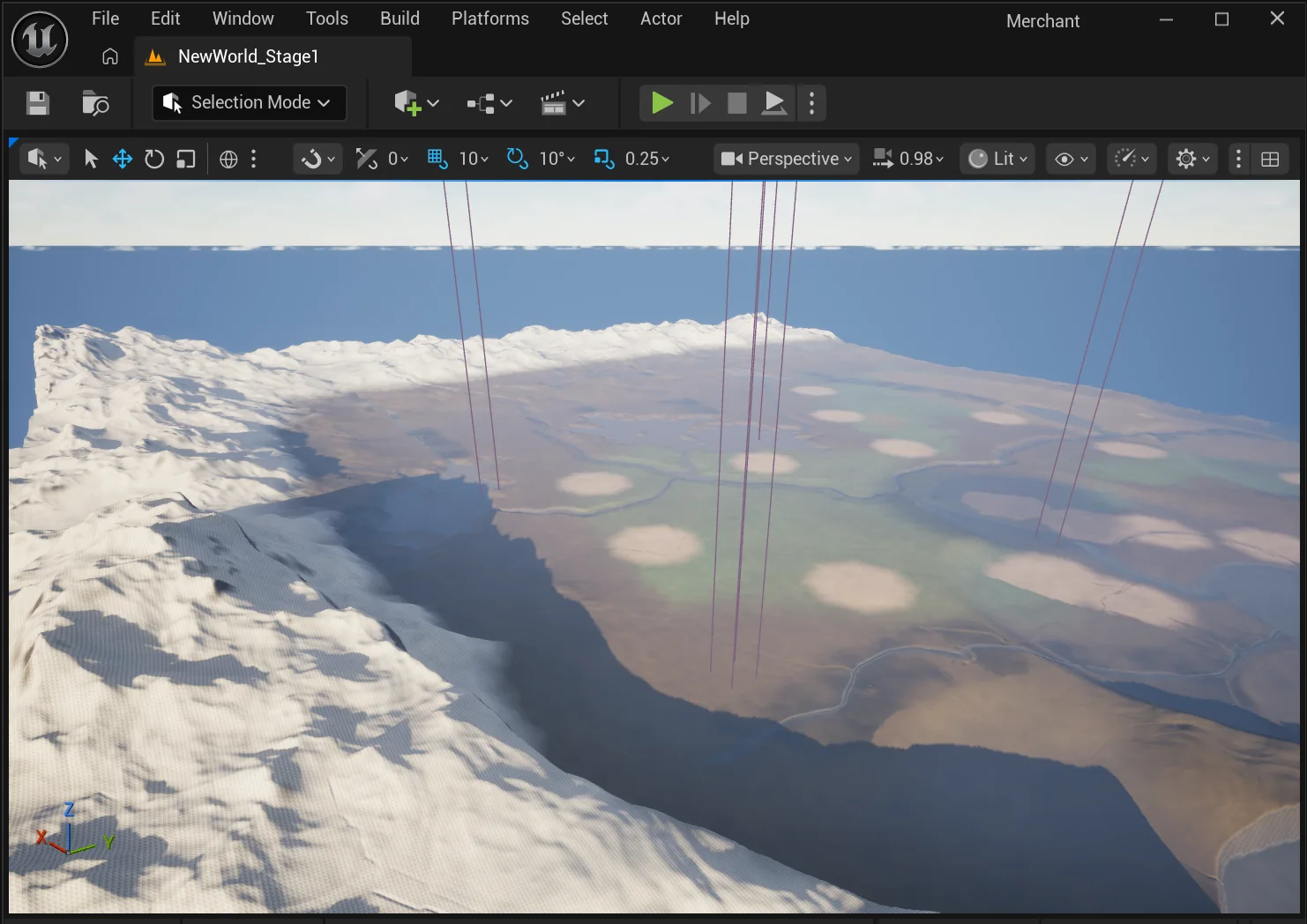
An editor overview of the broader terrain footprint. A wide camera view does not establish accessible or populated land.
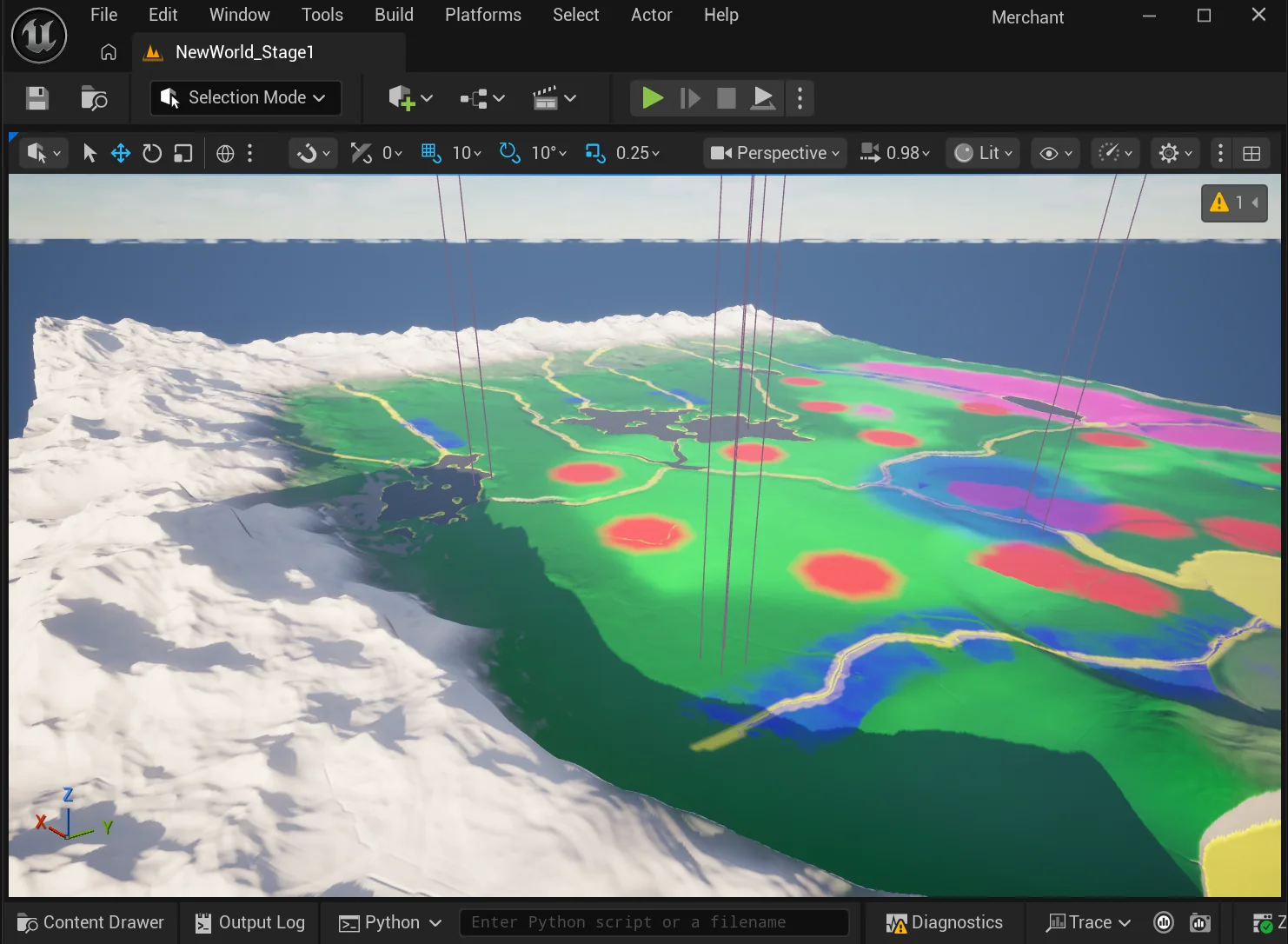
Diagnostic biome colours helped inspect terrain regions. These bright colours were not intended as the game's final appearance.
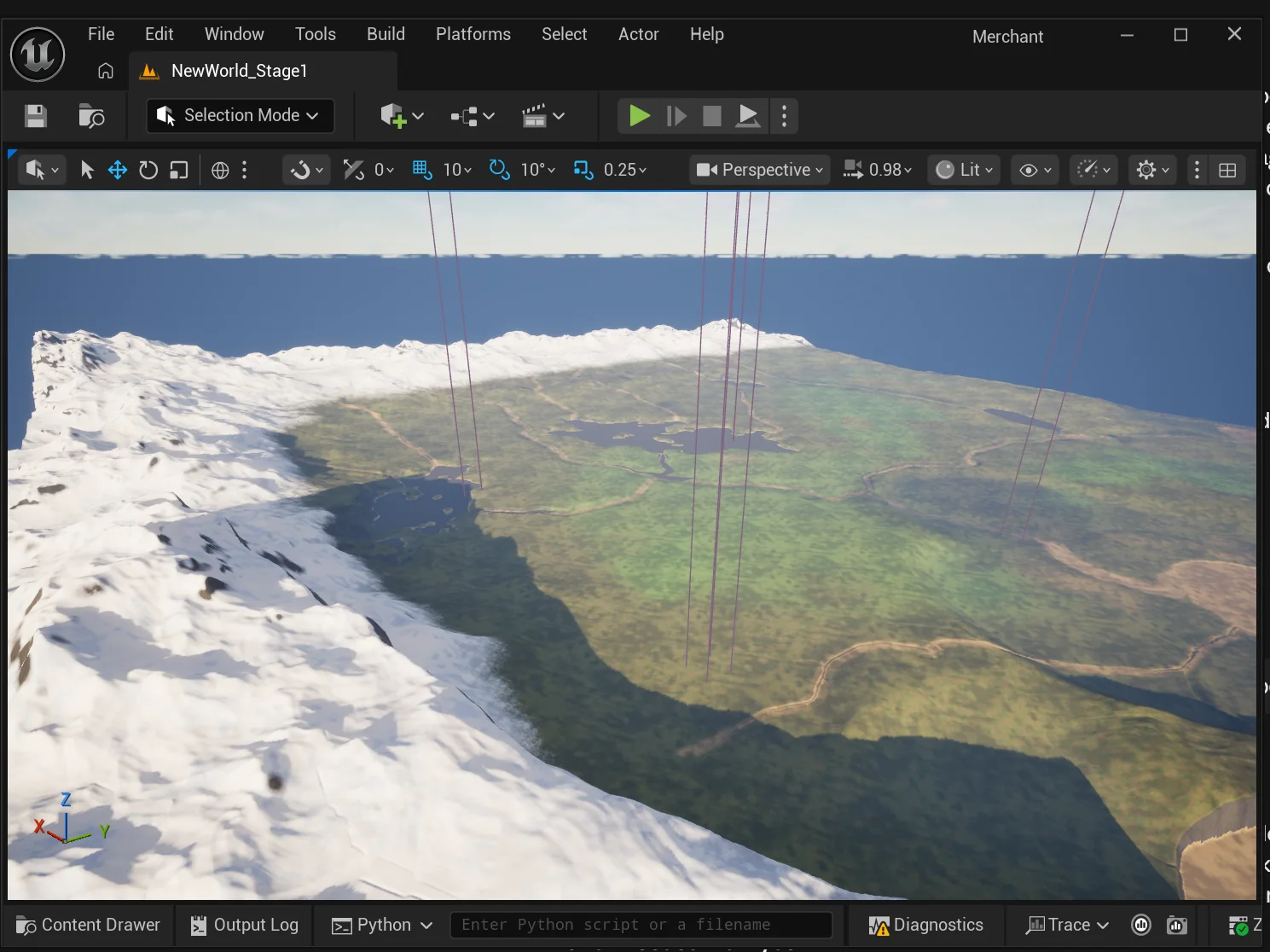
A textured editor view begins replacing the diagnostic colours. It is still an unfinished environment view, not packaged gameplay.
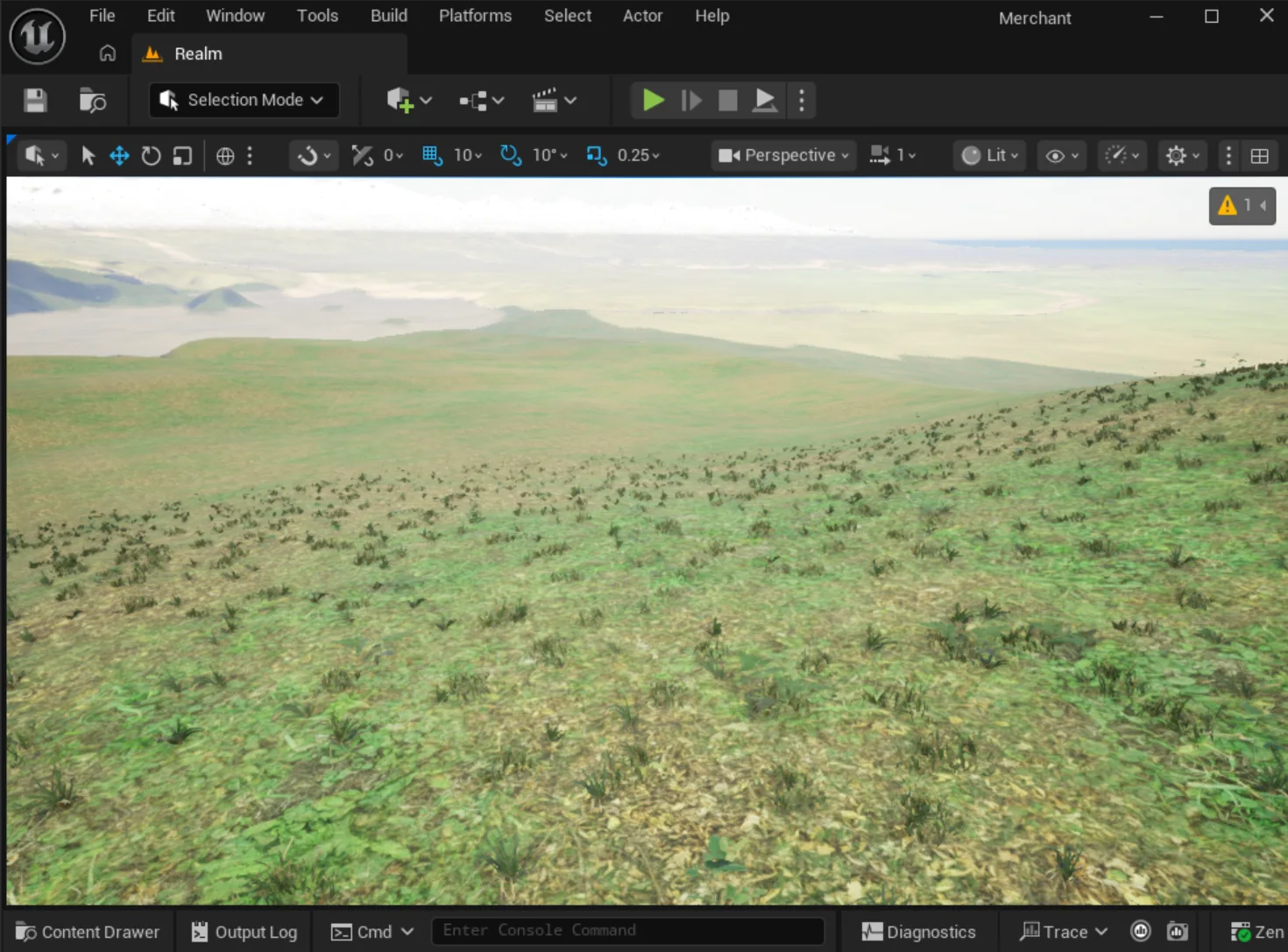
Grass appears across an editor hillside. Density, visibility and performance still require player-height checks.
The first player views.
Earlier in-game forest and lake captures show the move from terrain work toward player-height scenes. Their exact build numbers are unverified.
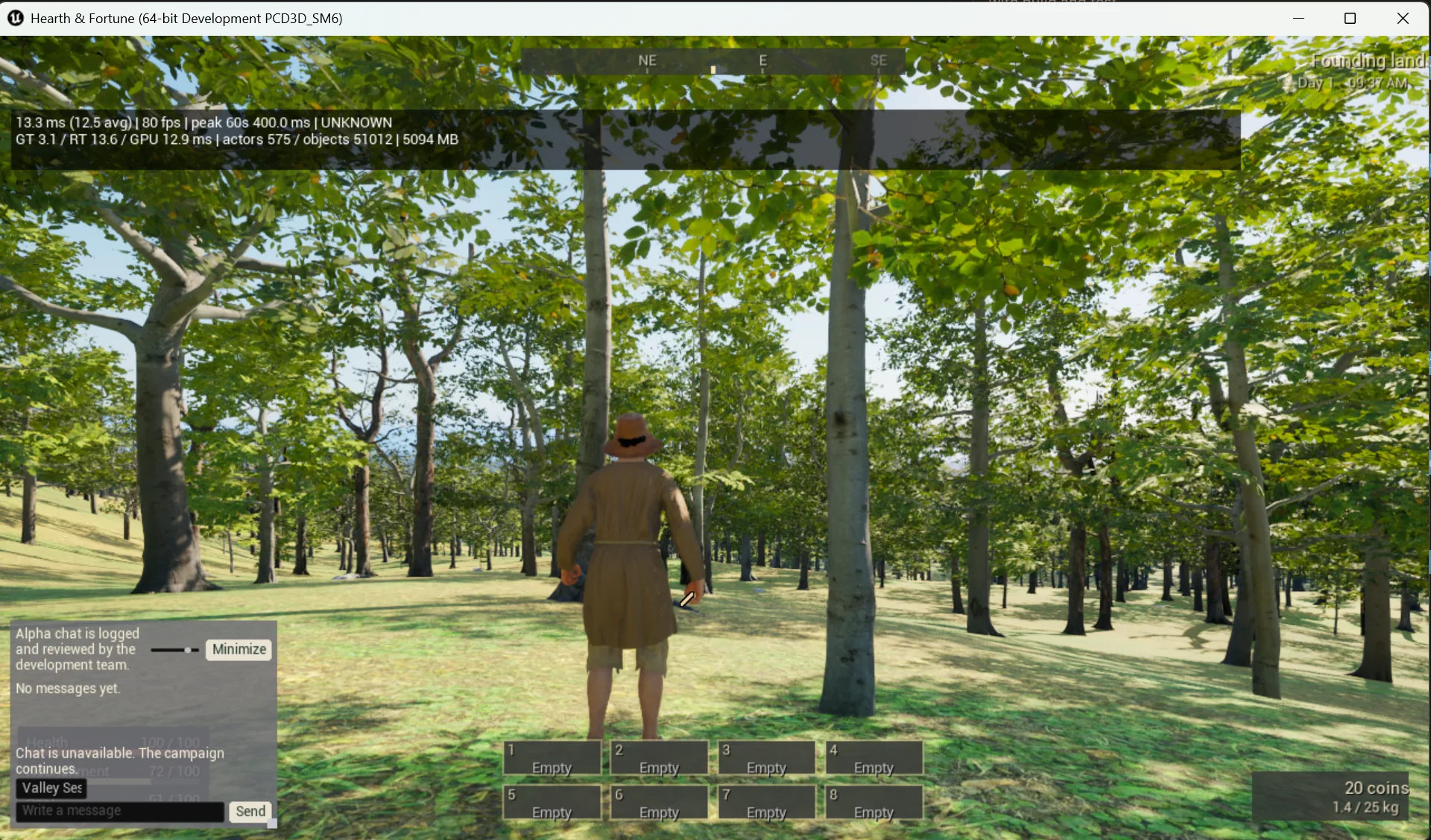
An earlier packaged alpha forest view. The exact build number was not preserved in this photo handoff.
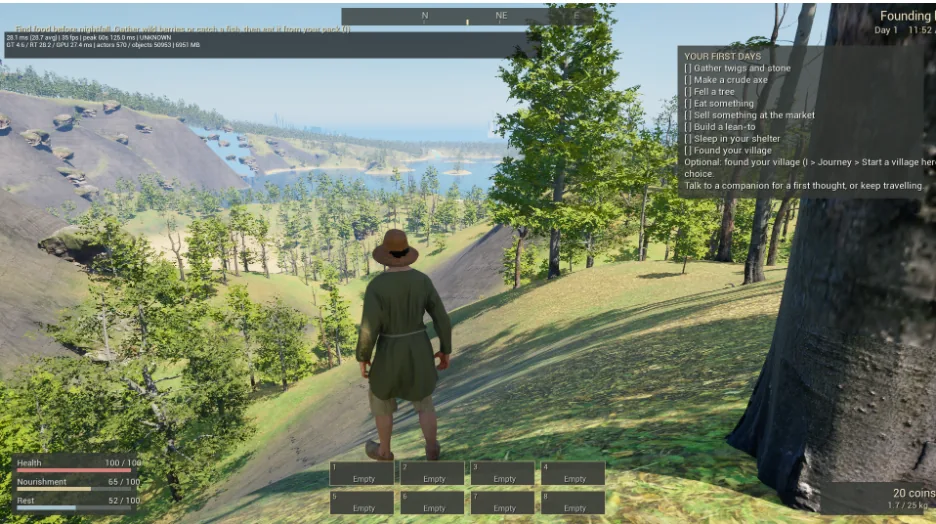
An earlier in-game hillside and lake view; the exact build number is unverified.
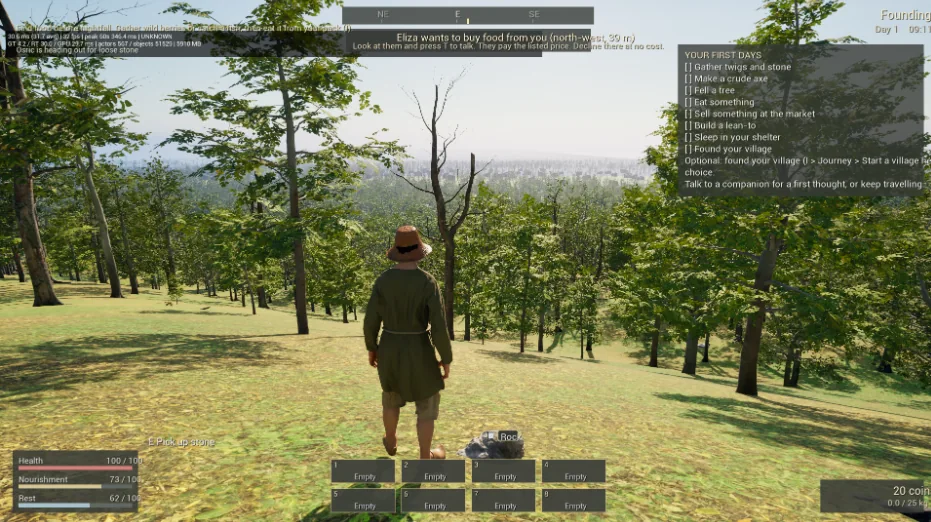
An earlier in-game forest view with resource prompts; the exact build number is unverified.
Three days in the valley.
Jim’s actual PB15J gameplay photos run from Day 1 morning through Day 3 on a snowy overlook with two NPC companions. The HUD and unfinished presentation remain visible.
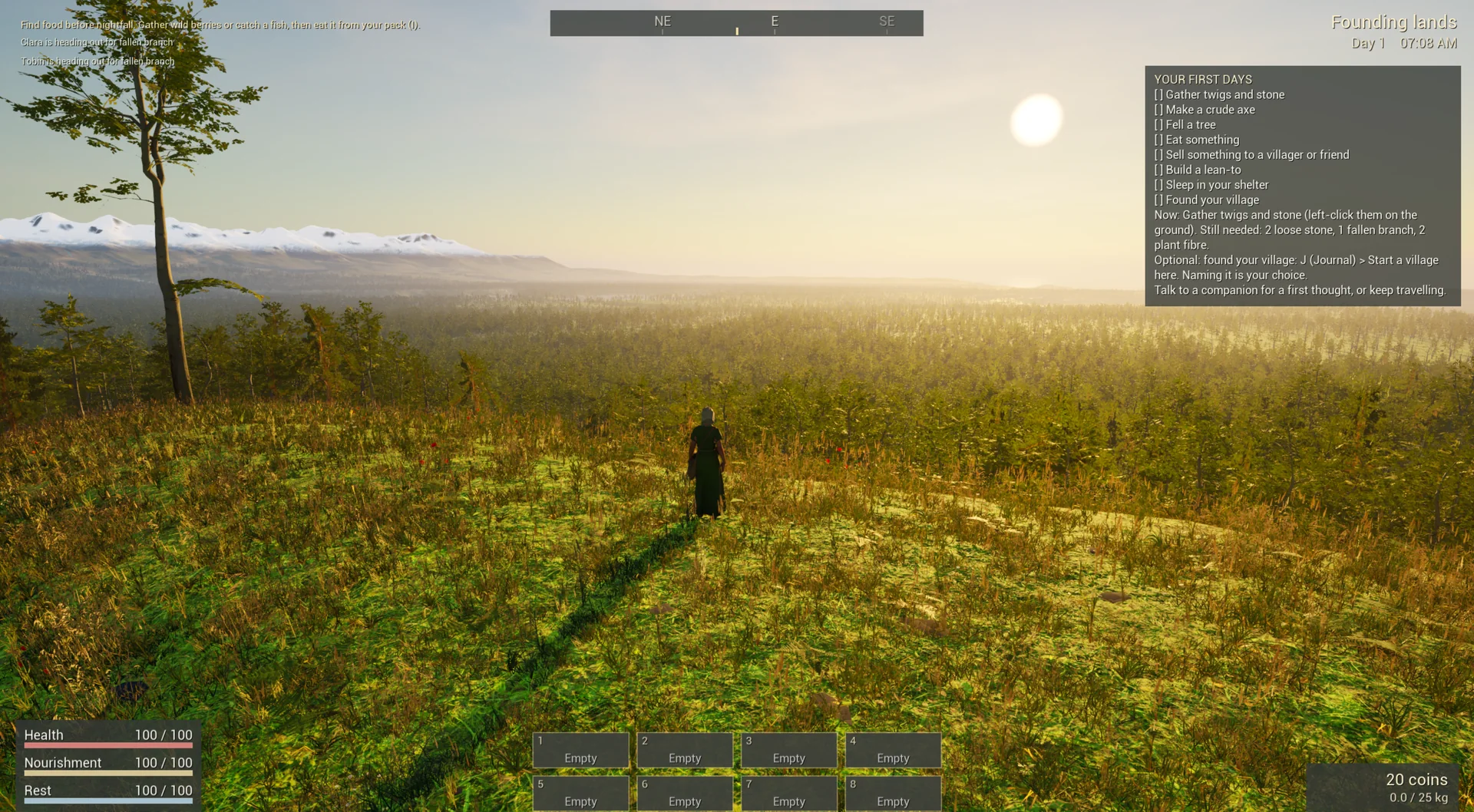
Jim looks out across the valley at the start of his PB15J playtest.
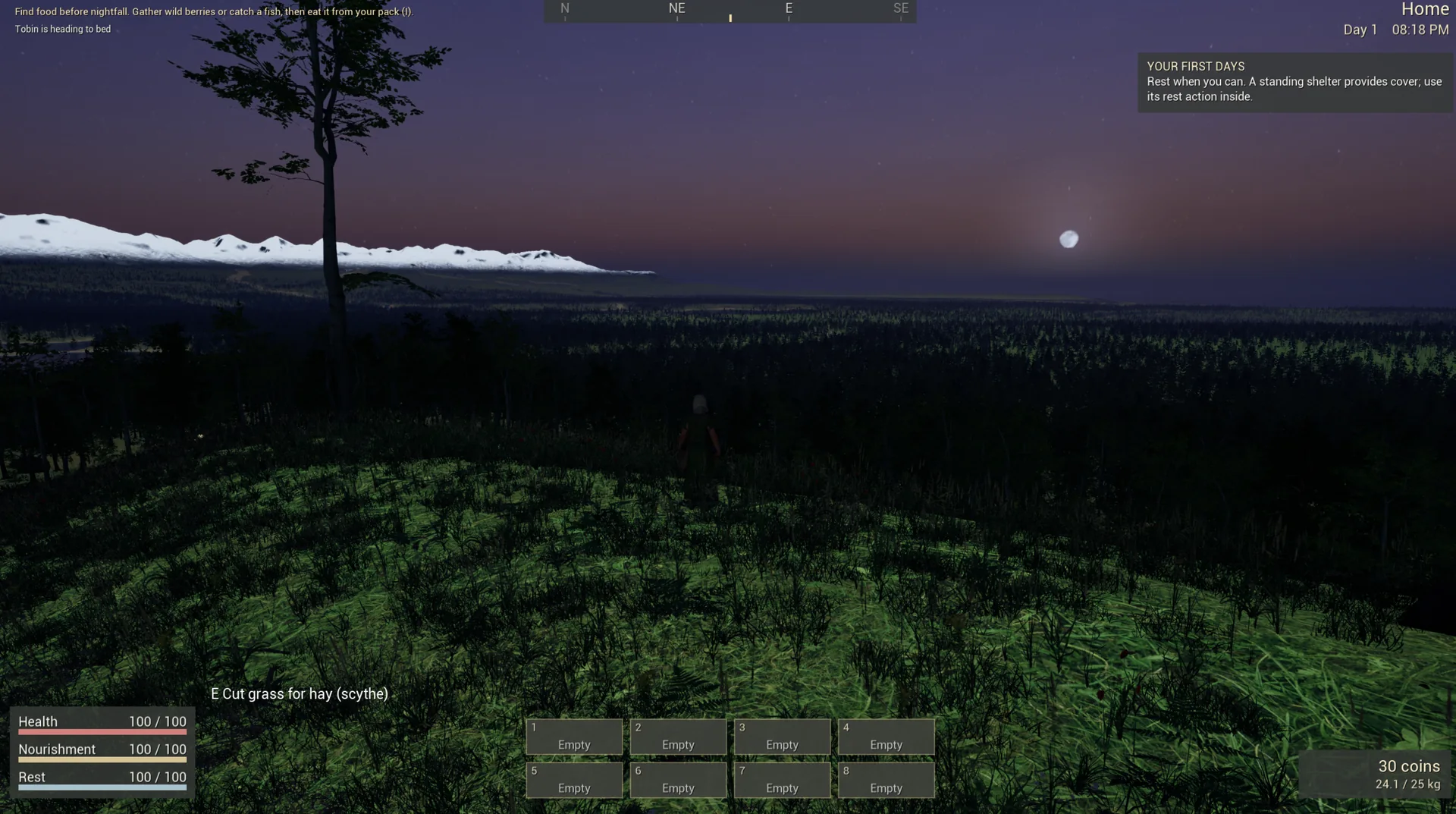
The same broad landscape after dark, with the moon above the trees.
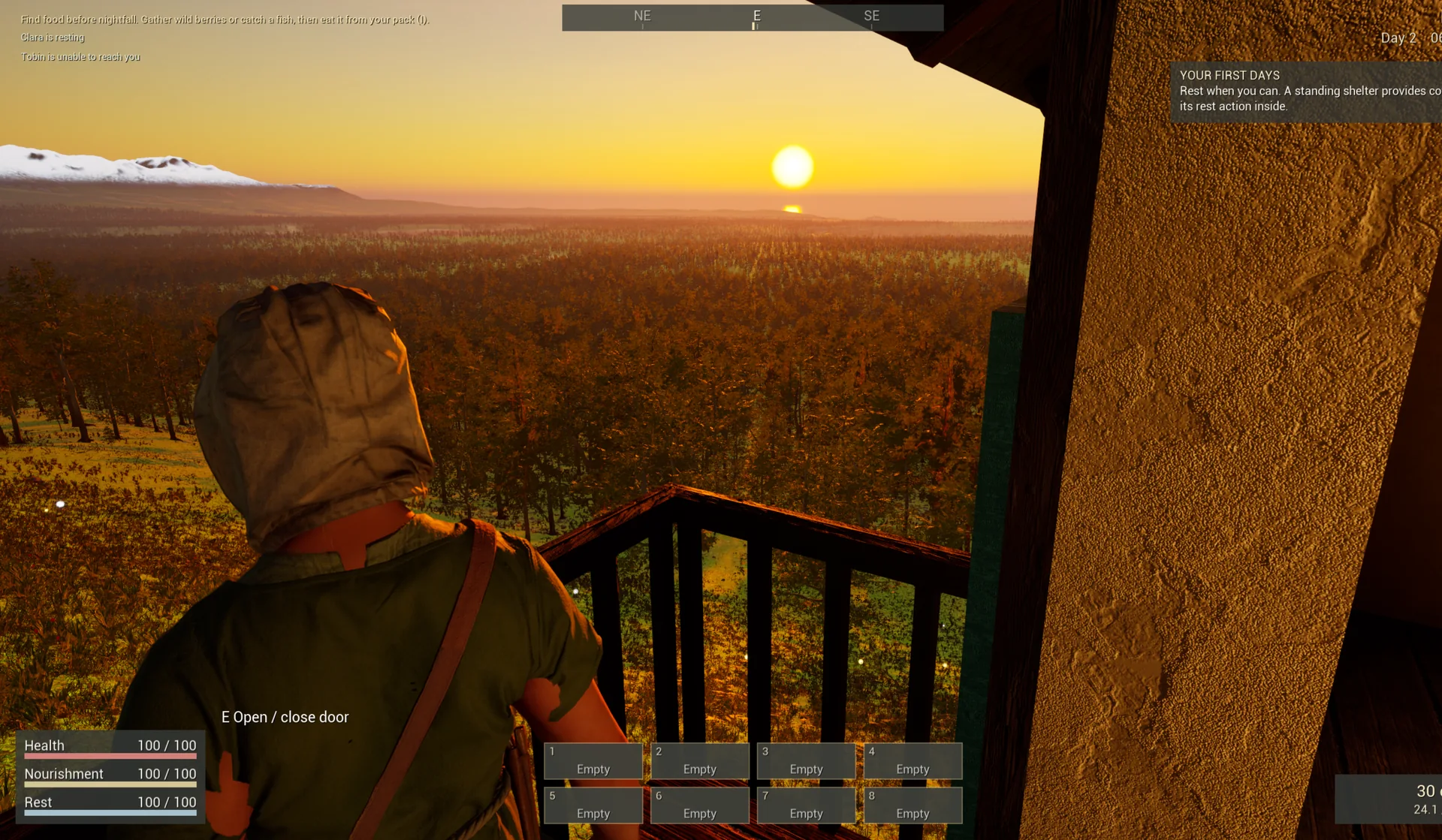
Jim's character watches sunrise from a balcony in the playtest world.
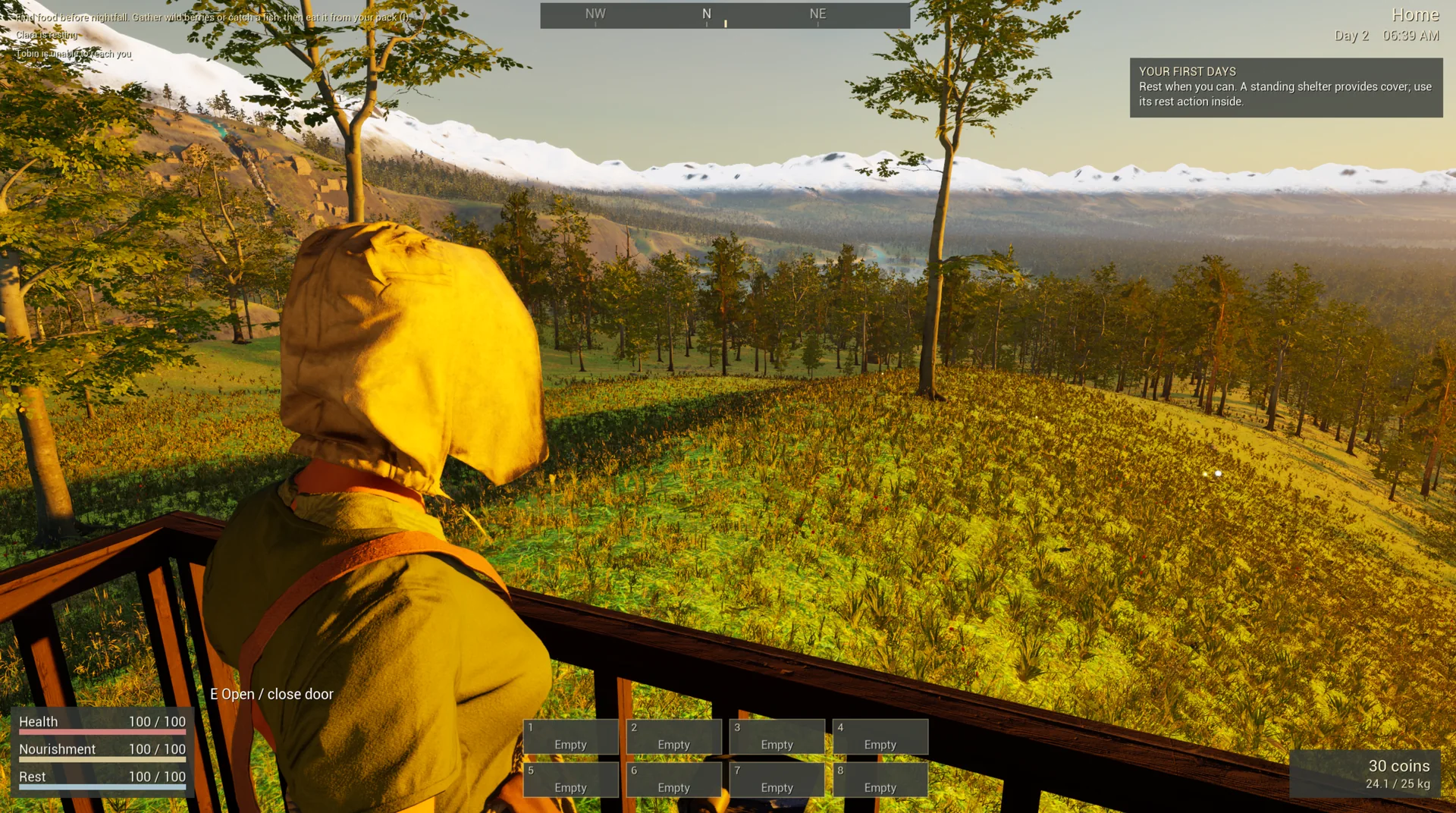
From the balcony, the view runs across woodland and lake toward snowy mountains.
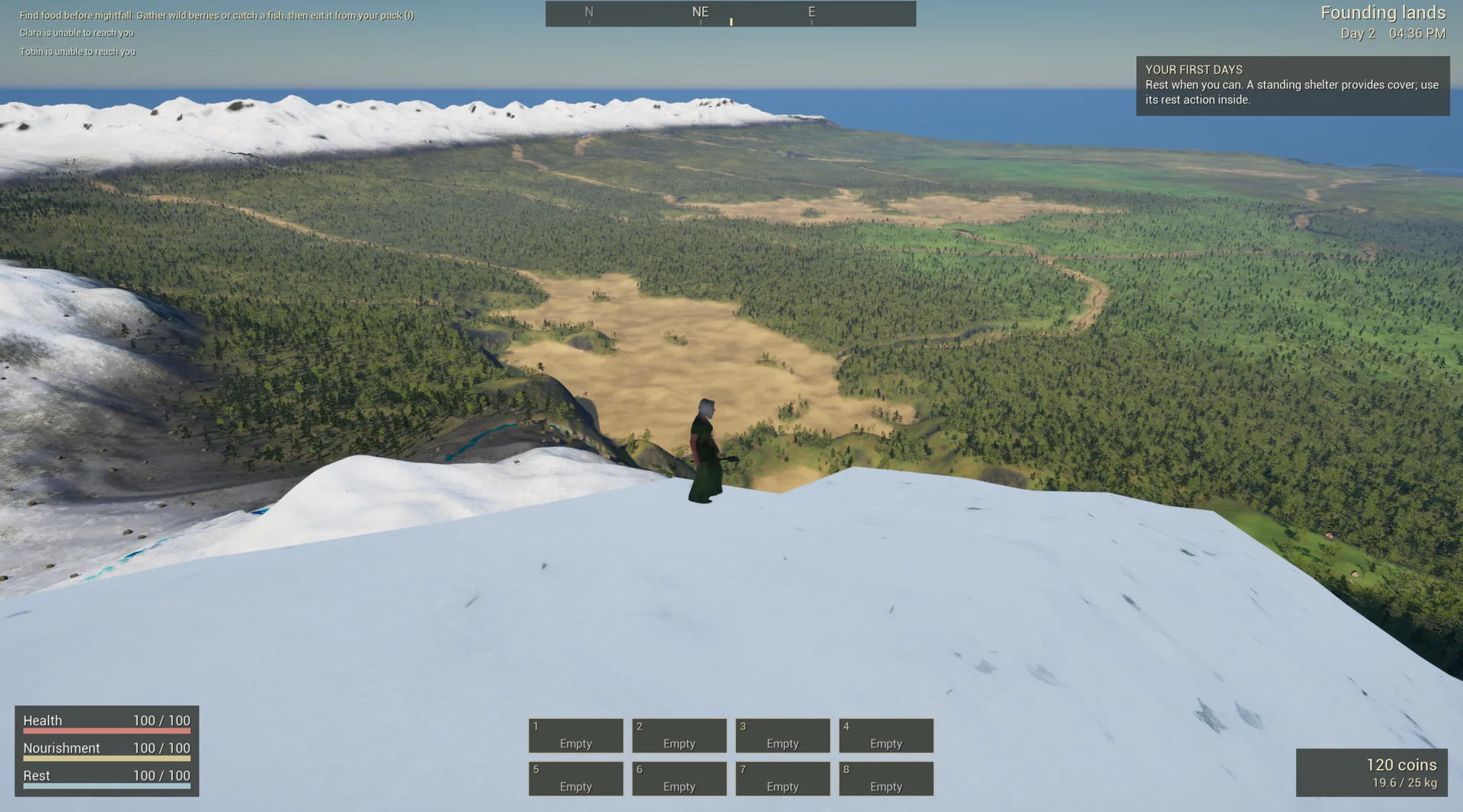
The first mountain-height frame. The lake surface is not visible here; later views are not evidence of a water-system fix.
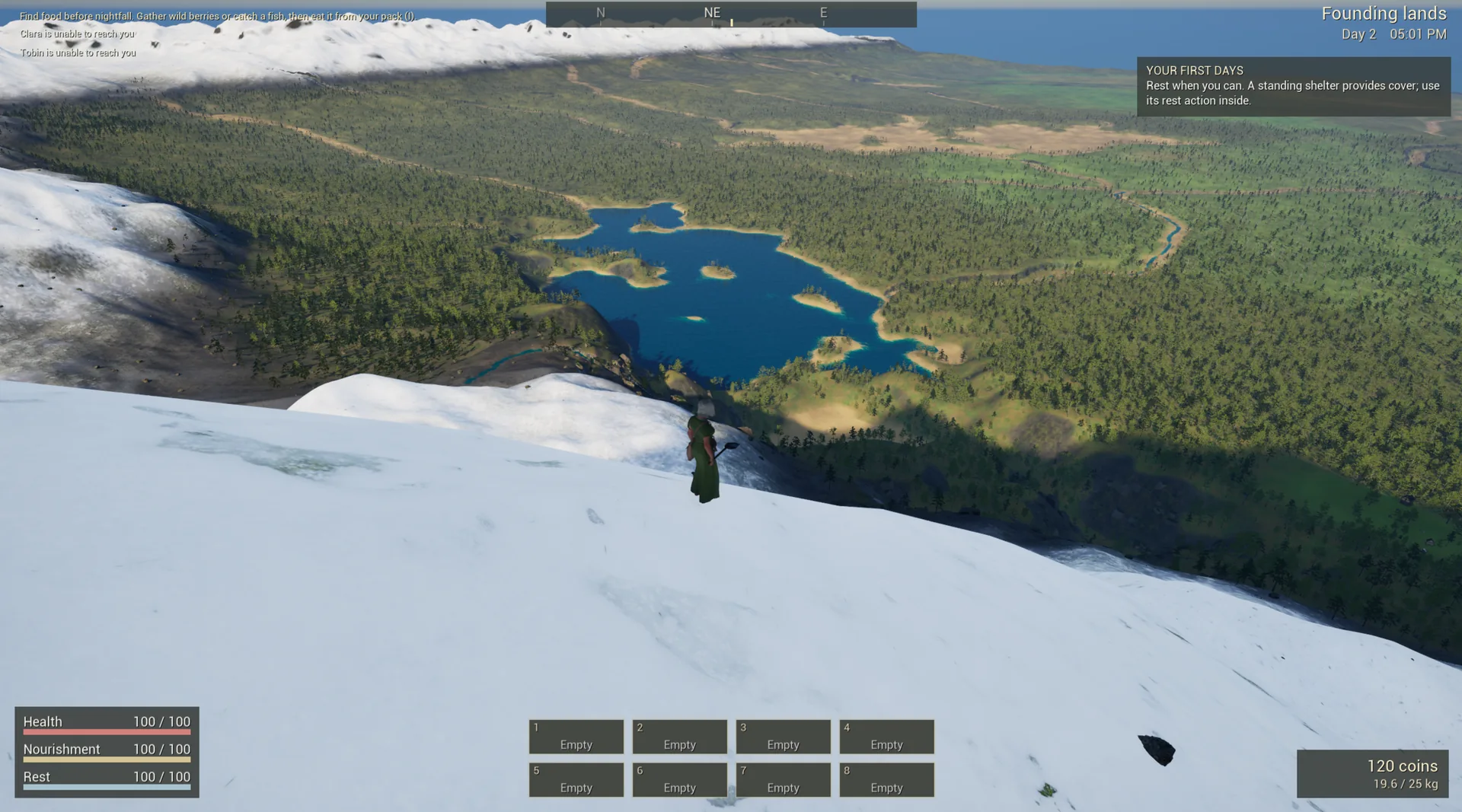
A snowy ledge gives a clear view of the lake and steep drop below.
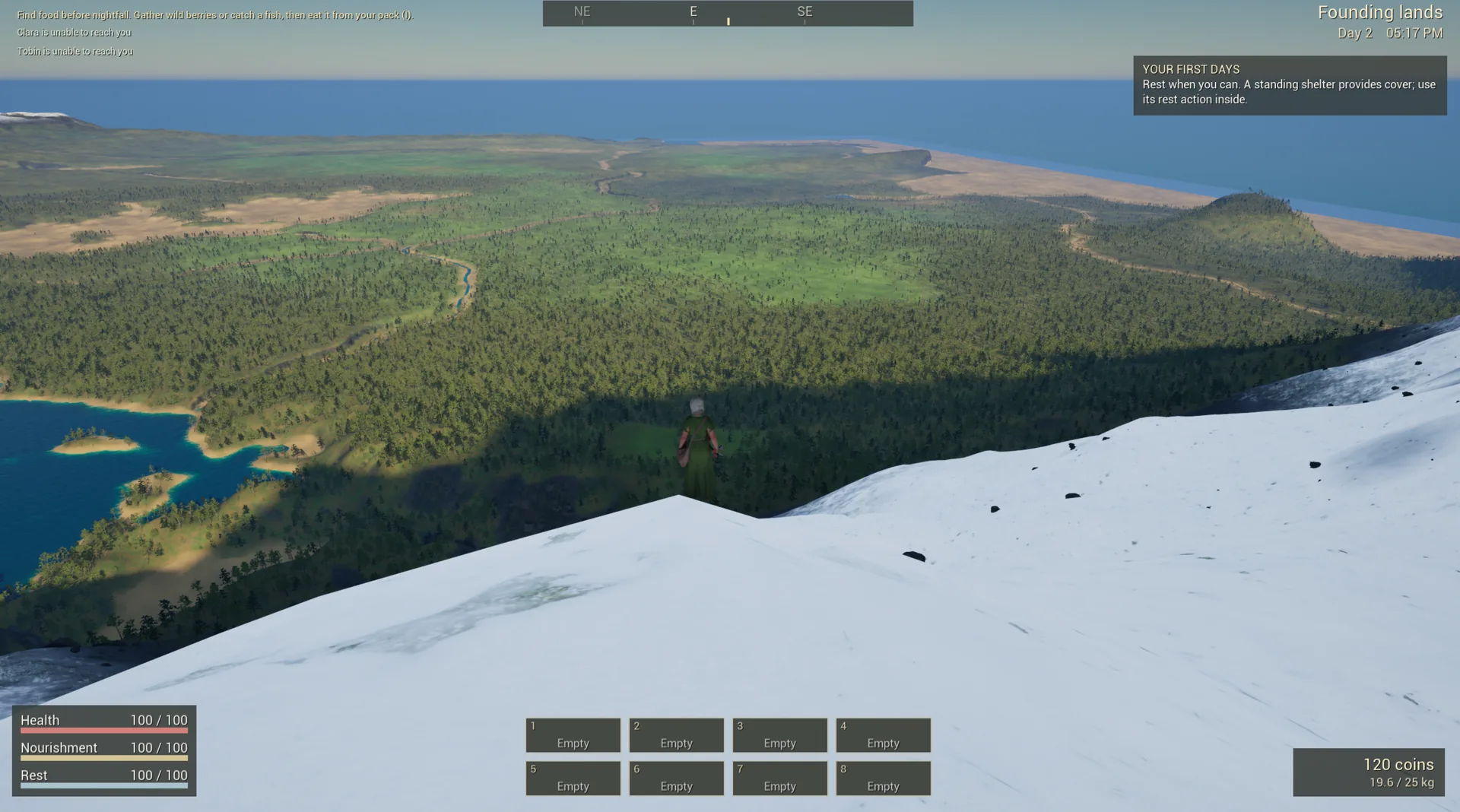
A second high viewpoint looks toward the coast and the valley below.
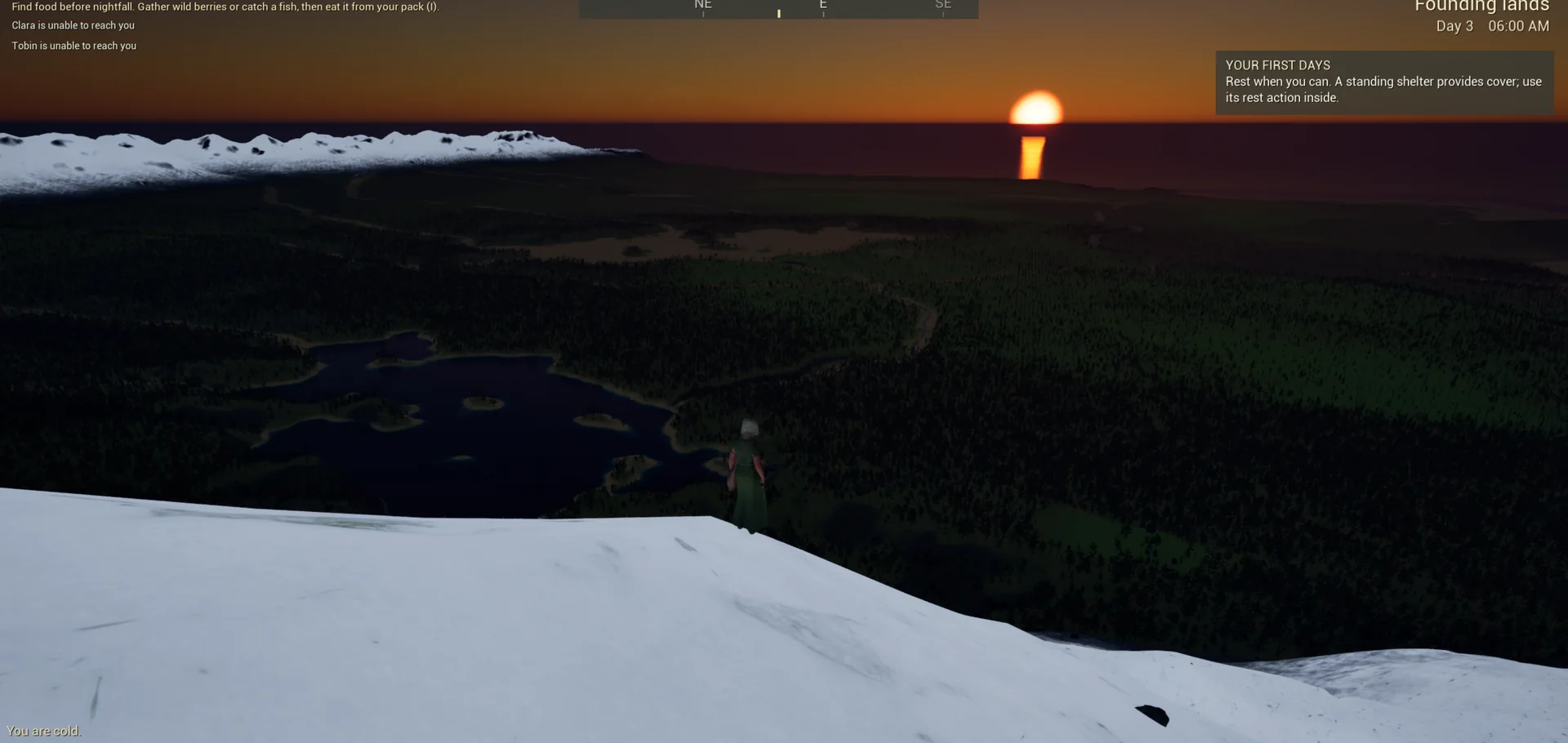
Dawn begins above the mountain. A cold-status message is visible in the HUD.
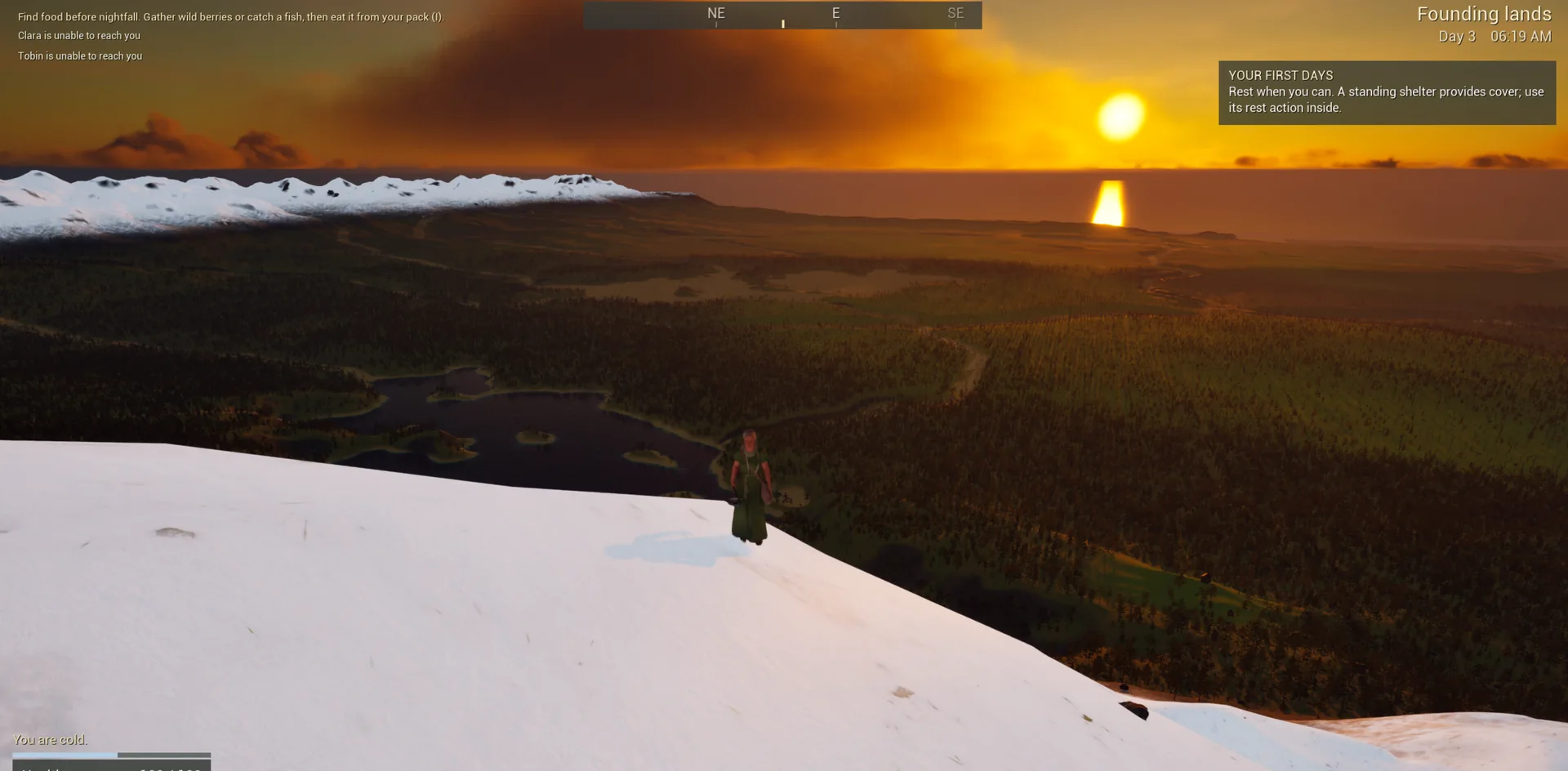
The sun breaks over the coast while the player stands above the dark valley.
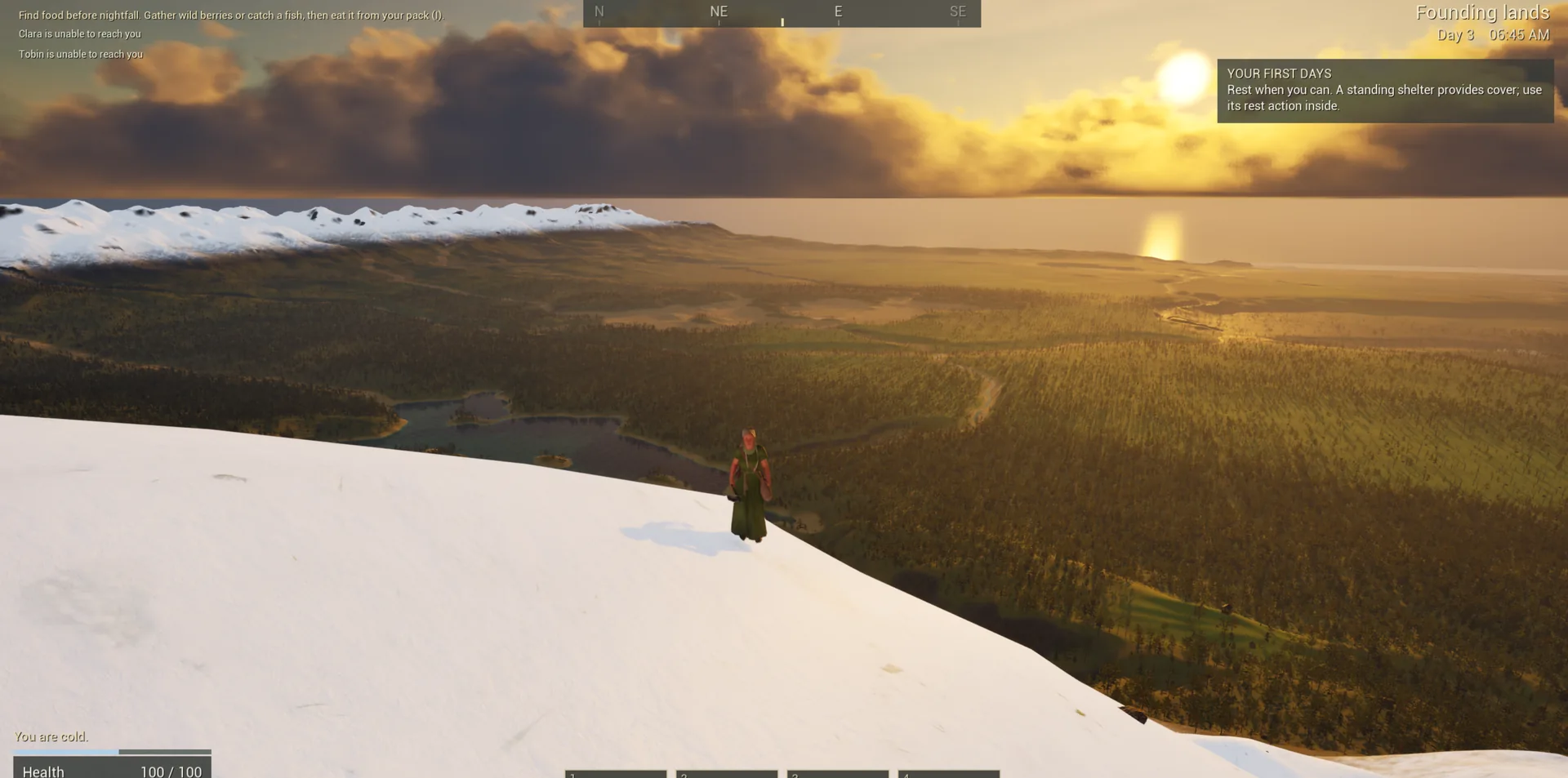
The mountain view changes as daylight reaches the valley.
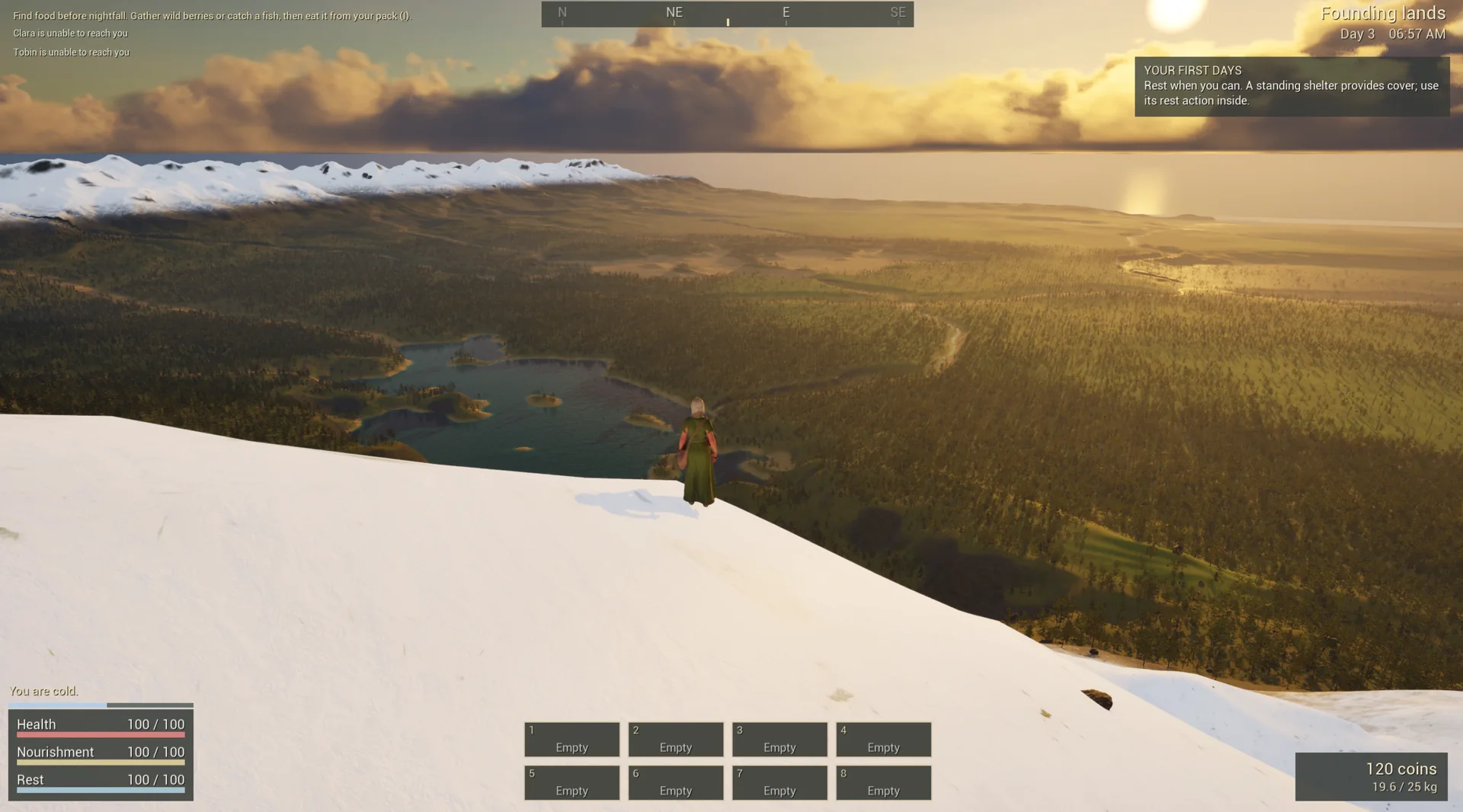
Brighter light reveals the lake and wooded ridges from the high overlook.
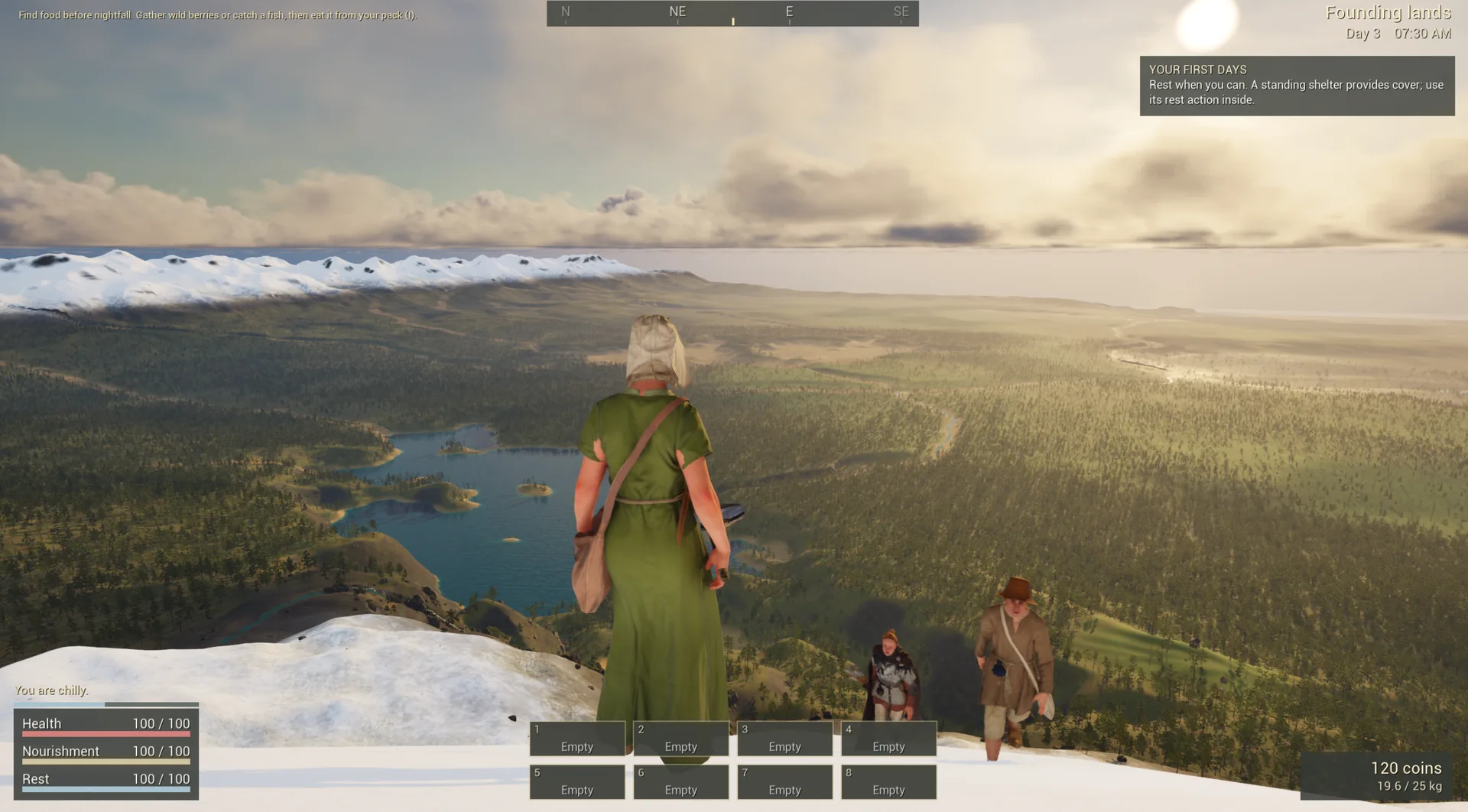
Jim's character and two NPC companions share the snowy overlook. This is single-player gameplay; the image does not establish that companion routes are fully reliable.
Later that morning, the player looks across the lake, forest and snowy ridge in clearer daylight. This is actual alpha gameplay, not proof that the whole valley is finished.
The valley, forest and detailed map.
The first two images are actual N10b packaged-build QA captures. The map is from the earlier N9 build. Diagnostic overlays remain visible; these stills are not performance benchmarks or full player acceptance.
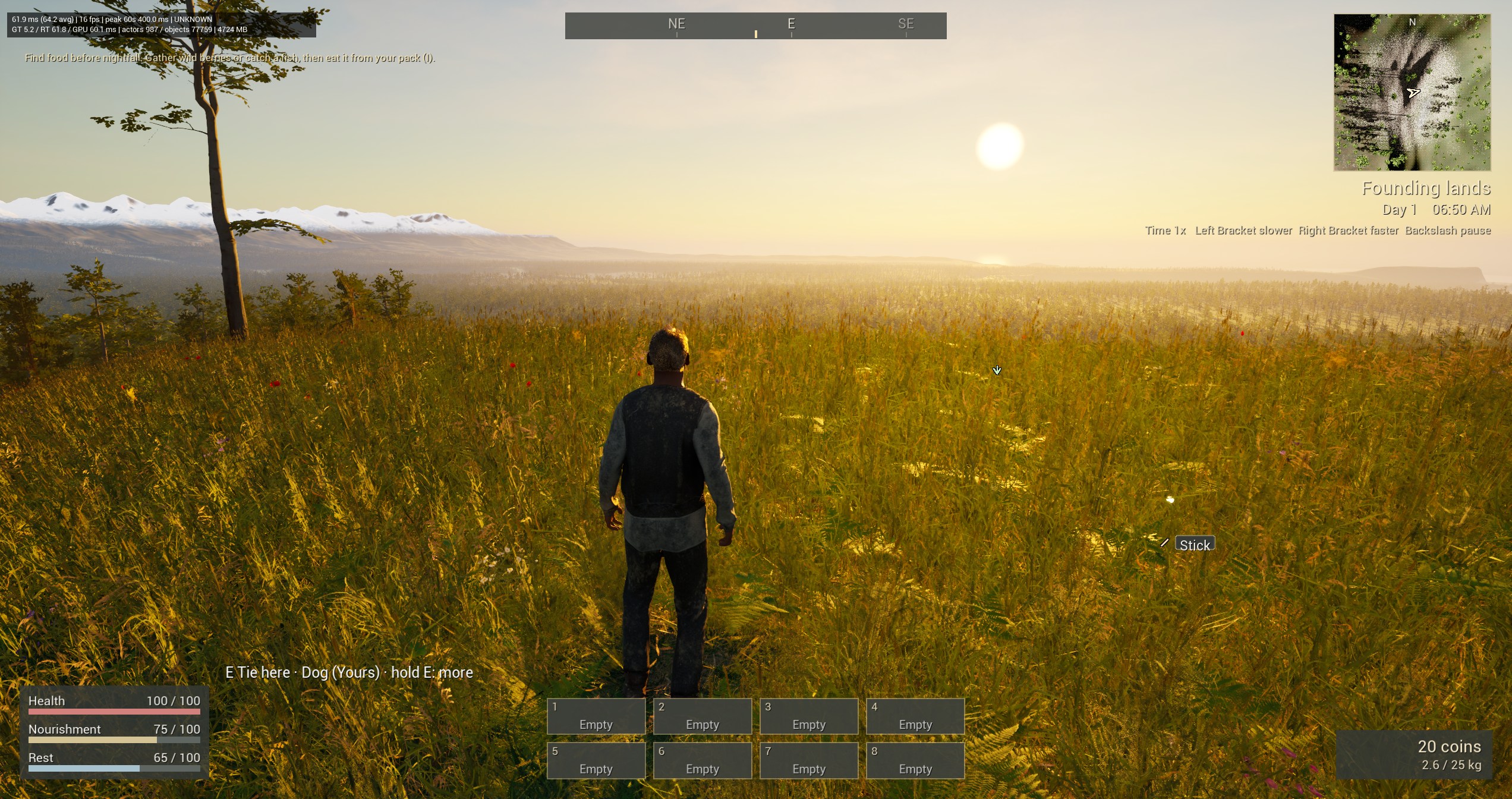
The updated HUD frames a broad meadow and forest vista. Diagnostic statistics are visible; this is work in progress.
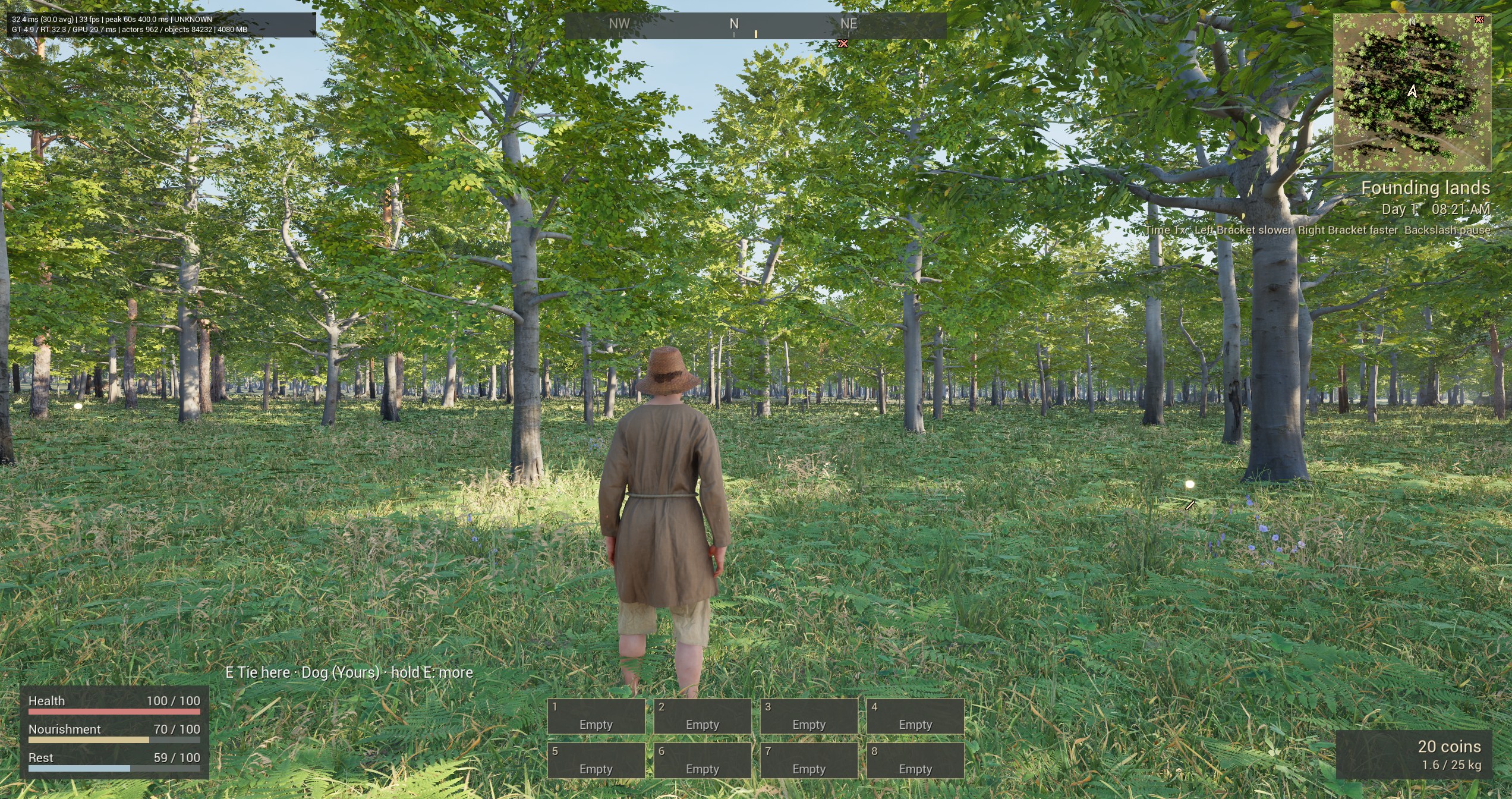
A packaged-build QA view among the trees. It does not establish that every movement, water or NPC route is accepted.
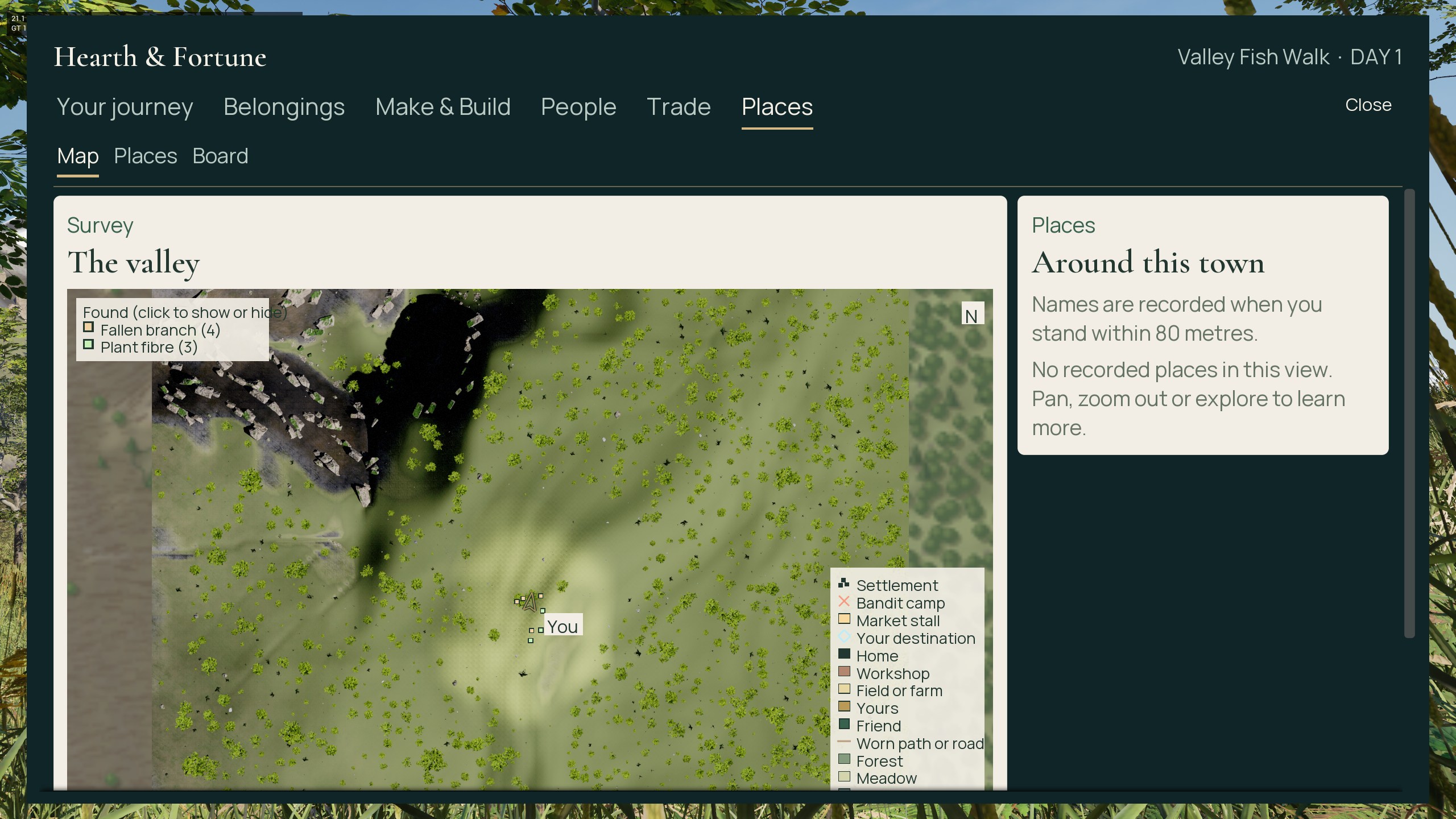
The Book's Places view shows the player marker, discovered resources and landmark legend. This is an earlier N9 image, not an N10b capture.
Read the N10b journal checkpoint · Request free individual Windows alpha access at Jim@iconicxp.games.
Making Otis look like Otis — a work in progress.
Otis is still a work in progress. The finished version—and his in-game running reveal—is yet to come. Stay tuned.
A real Australian Shepherd, three studio-rendered model passes and the comparison that made a likeness problem specific. The v19 nose correction is authored only: it has not been applied or rendered. None of these images is in-game footage.
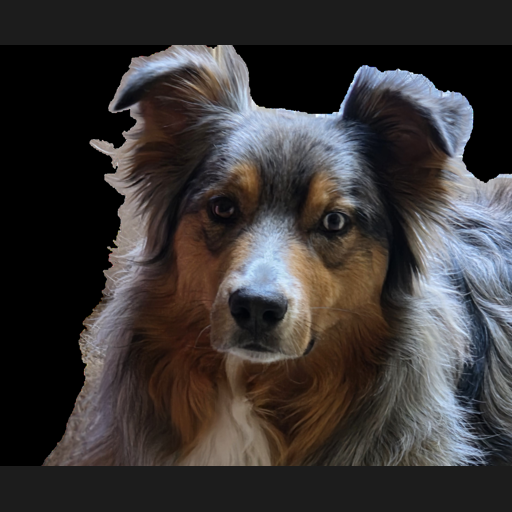
Real Otis: existing background-removed inspection reference.
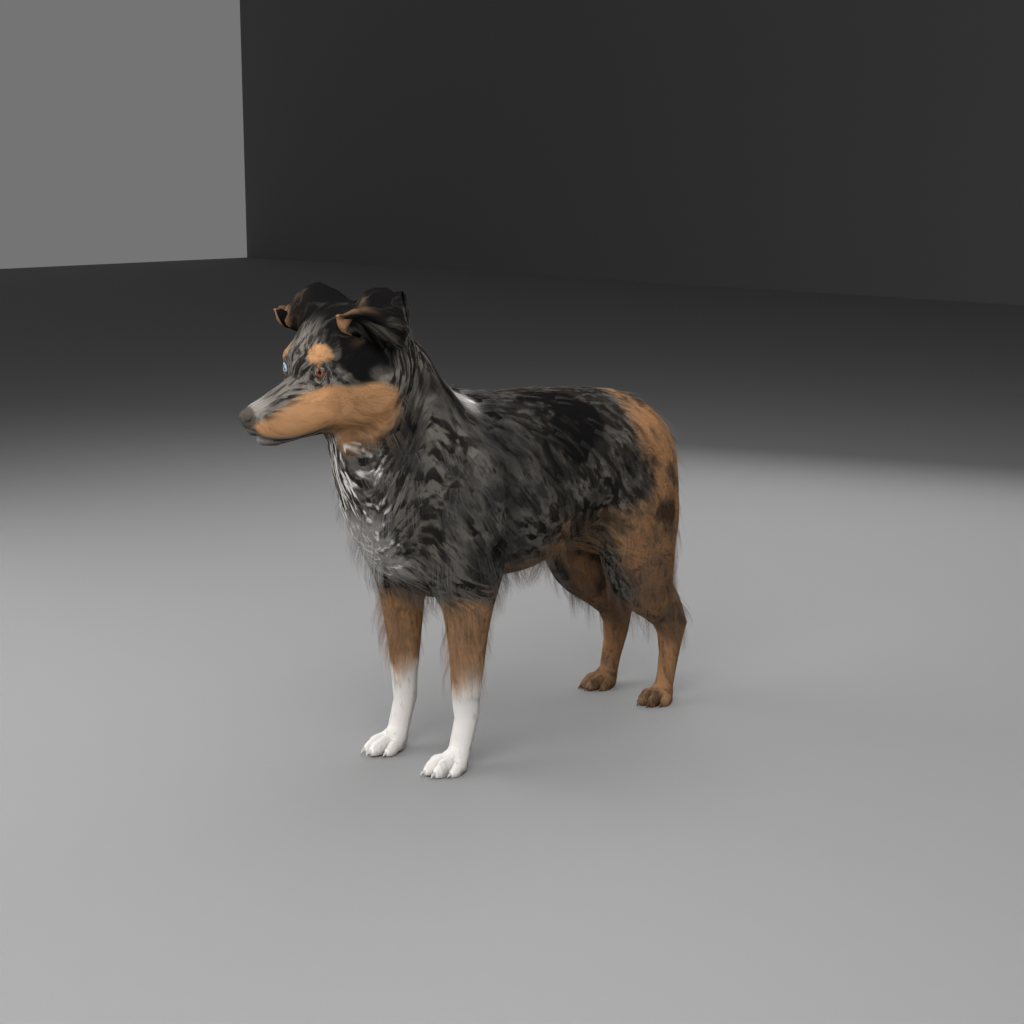
v4 development render — earlier coat and likeness pass; not gameplay.
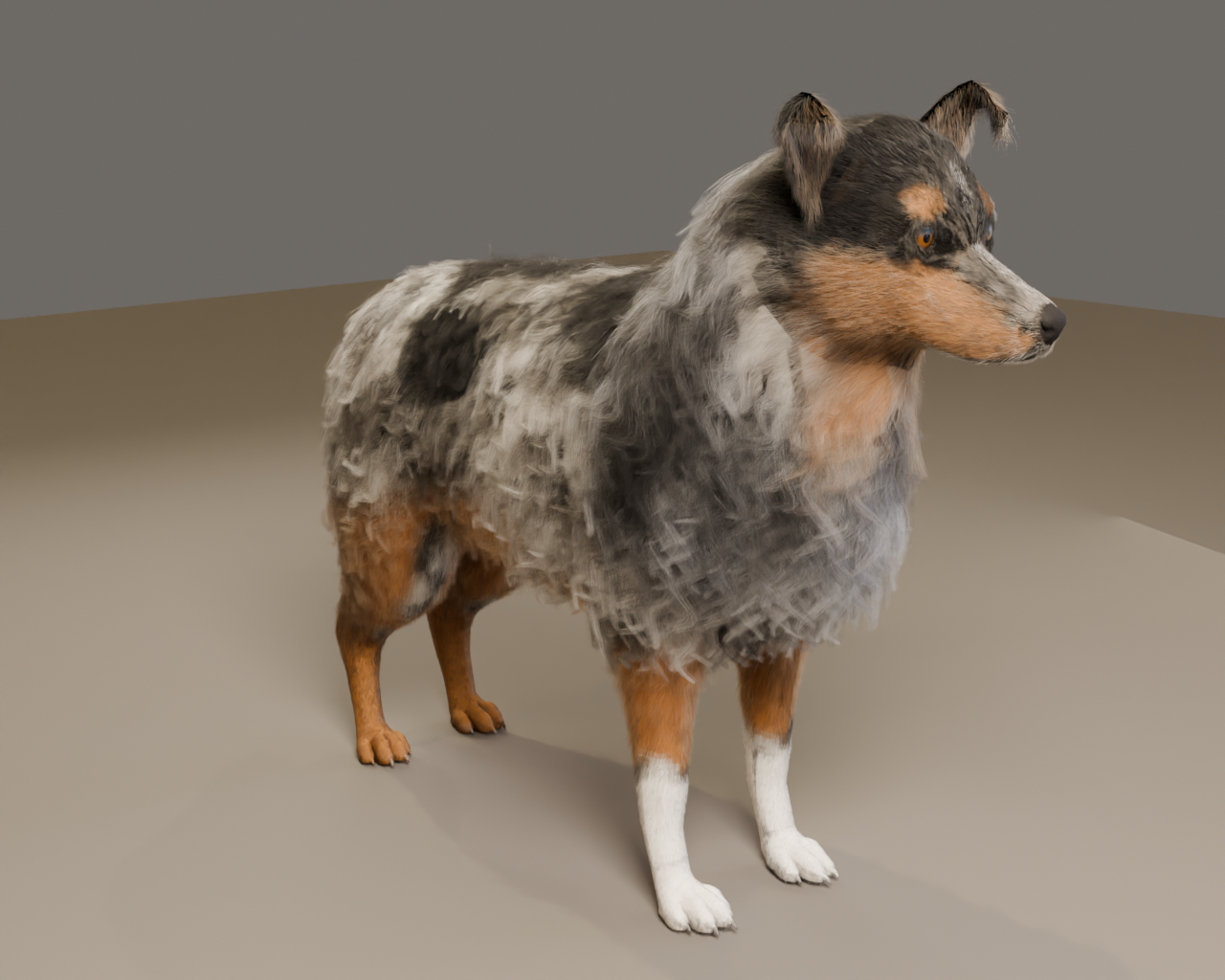
v12c development render — intermediate fur/likeness iteration; not gameplay.
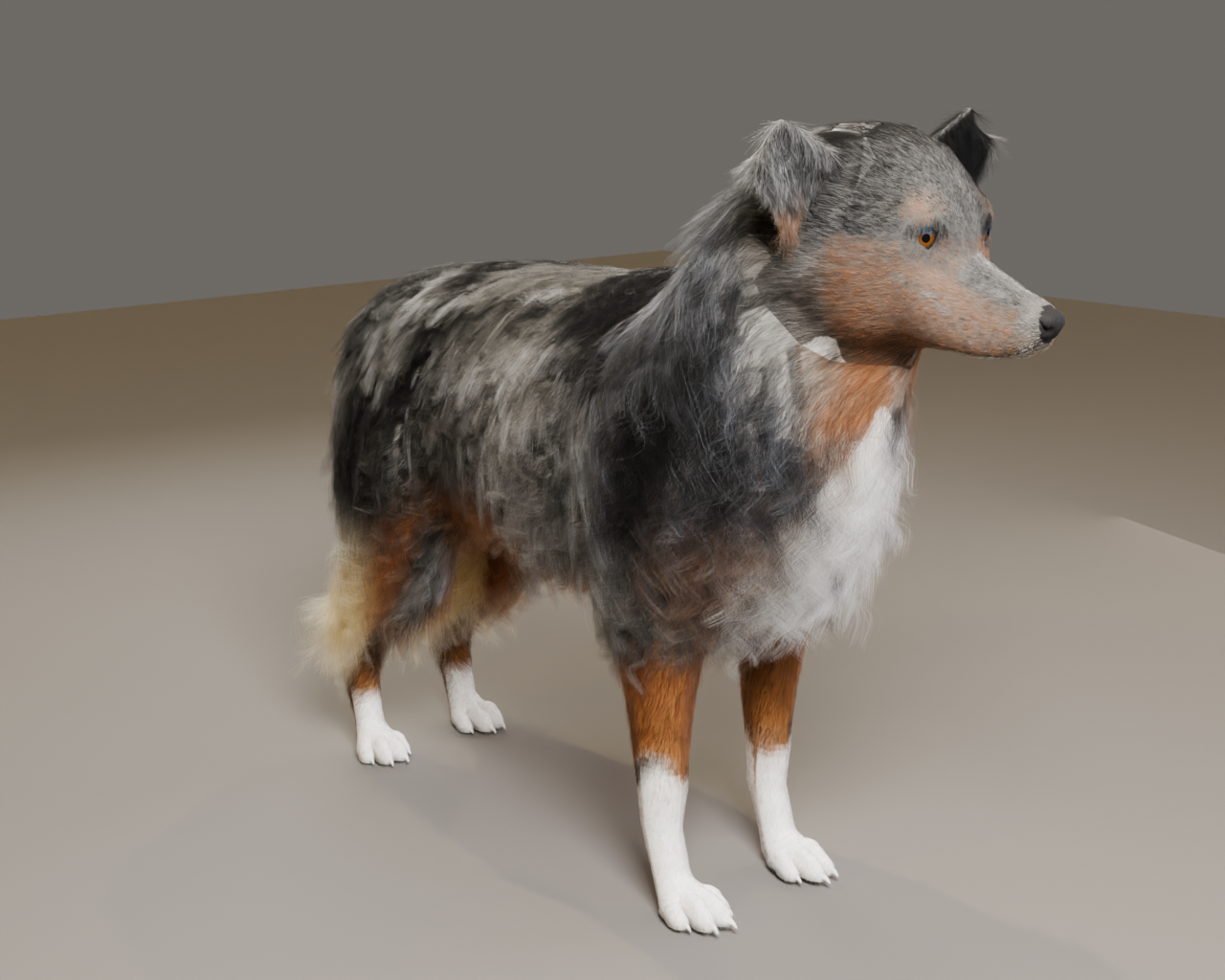
v18 development render — latest rendered baseline in this handoff; not v19 or gameplay.
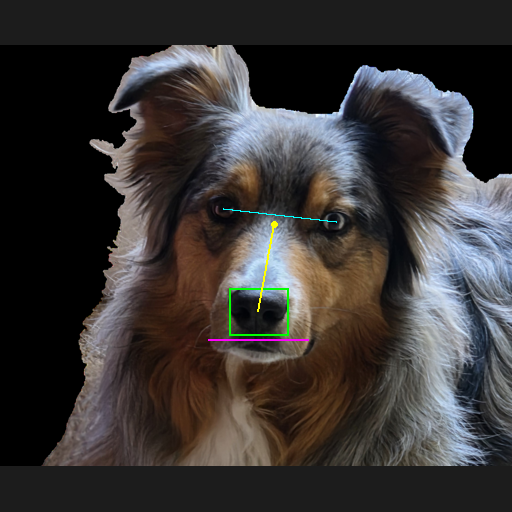
Real Otis inspection reference with nose/eye/muzzle landmarks; approximate image-space comparison.
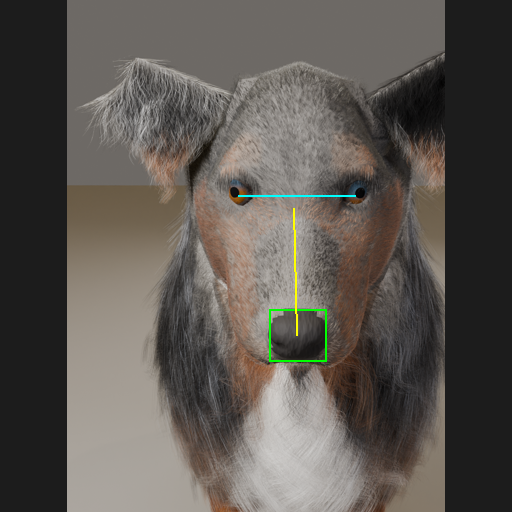
Corresponding existing v18 inspection render with landmarks; v19 corrected result not rendered.
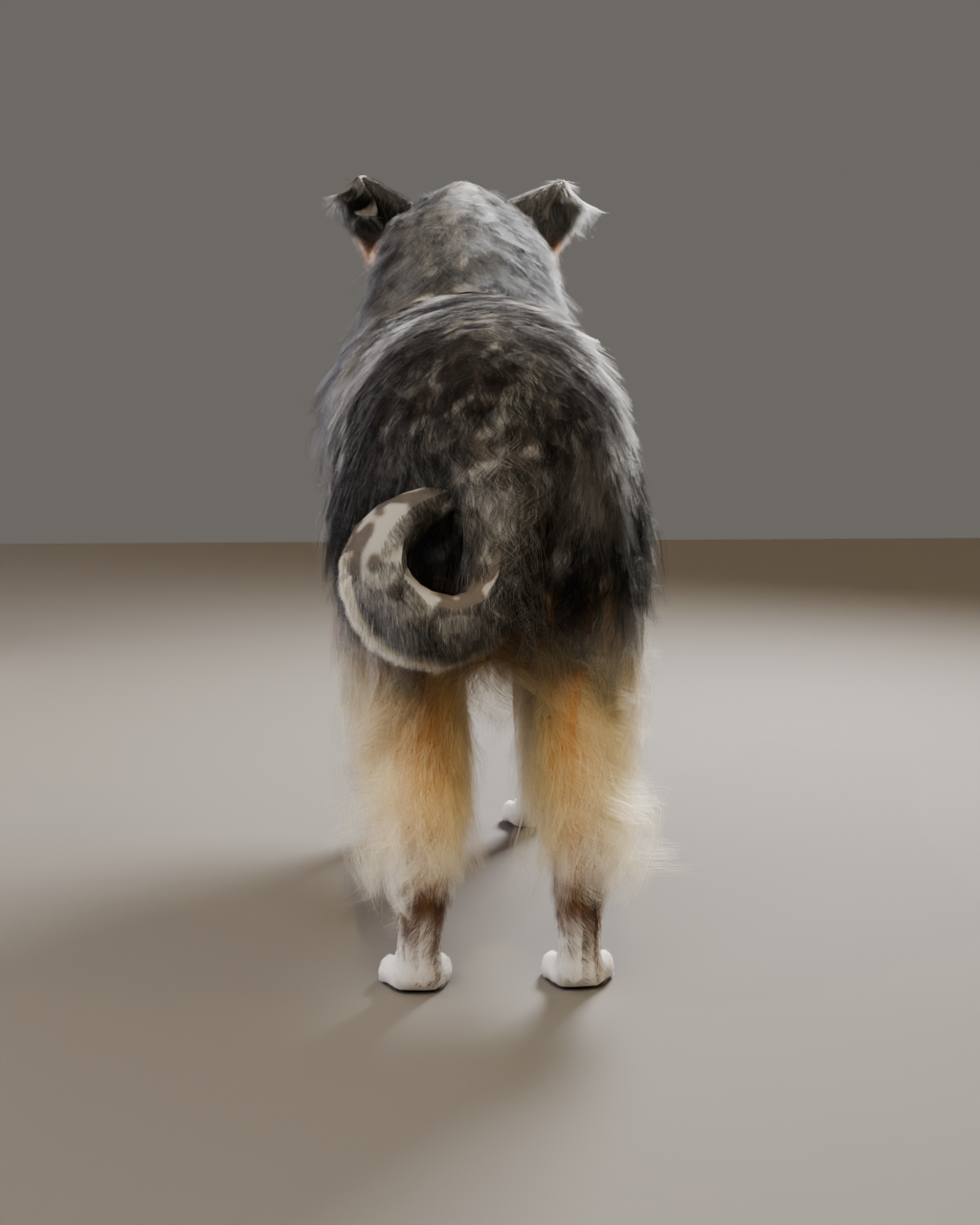
v18 rear development render — visible tight tail loop; unresolved, not final or gameplay.
The nose marks compare approximate image proportions across different cameras, not anatomical measurements. The v18 tail loop, a dark ear and a pale head patch remain open. Read the Otis journal checkpoint or the public itch.io development post.
Otis is still a work in progress. The finished version—and his in-game running reveal—is yet to come. Stay tuned.